Adult Sexual Development
From the first hookup to the first anniversary to the fiftieth, how does sex change as we move through adult life?

Sexuality does not stand still once we grow up. The way we date, partner, and have sex keeps shifting across the whole span of adult life. A twenty-year-old swiping through a dating app, a couple settling into their third year of marriage, and a seventy-five-year-old starting a new relationship are all doing "adult sexuality," yet each faces a different set of choices and challenges.
It is worth saying at the outset that there is no single "normal" path through adult sexuality. Some people marry once and stay married for life; others never marry; others divorce and remarry, move through a series of committed partnerships, or build rich lives centered on friendship and community rather than a romantic partner. The patterns we describe in this chapter are averages and common tendencies, not rules or ideals. Understanding them can help you make sense of your own experiences, whatever shape those take.
11.1 Sexuality in Young Adulthood
Late adolescence and the twenties are often imagined as the peak years of sexual activity — a stretch of freedom before the responsibilities of life have settled in. Psychologists have a name for this period. Emerging adulthoodEmerging adulthoodThe developmental stage from roughly the late teens through the mid-twenties, when a person is no longer an adolescent but has not yet fully taken on adult roles such as a stable career, marriage, or children.View in glossary → is the developmental stage from roughly the late teens through the mid-twenties, when many people in industrialized countries are no longer adolescents but have not yet taken on the full roles of adult life, such as a stable career, marriage, or children (Arnett, 2000)ReferenceArnett, J. J. (2000). Emerging adulthood: A theory of development from the late teens through the twenties. American Psychologist, 55(5), 469–480.. It is a time of exploration, and for many that includes exploring their sexuality.
And yet the headline finding of recent years runs against what most people think about young people: young adults today are having less sex than ever before.
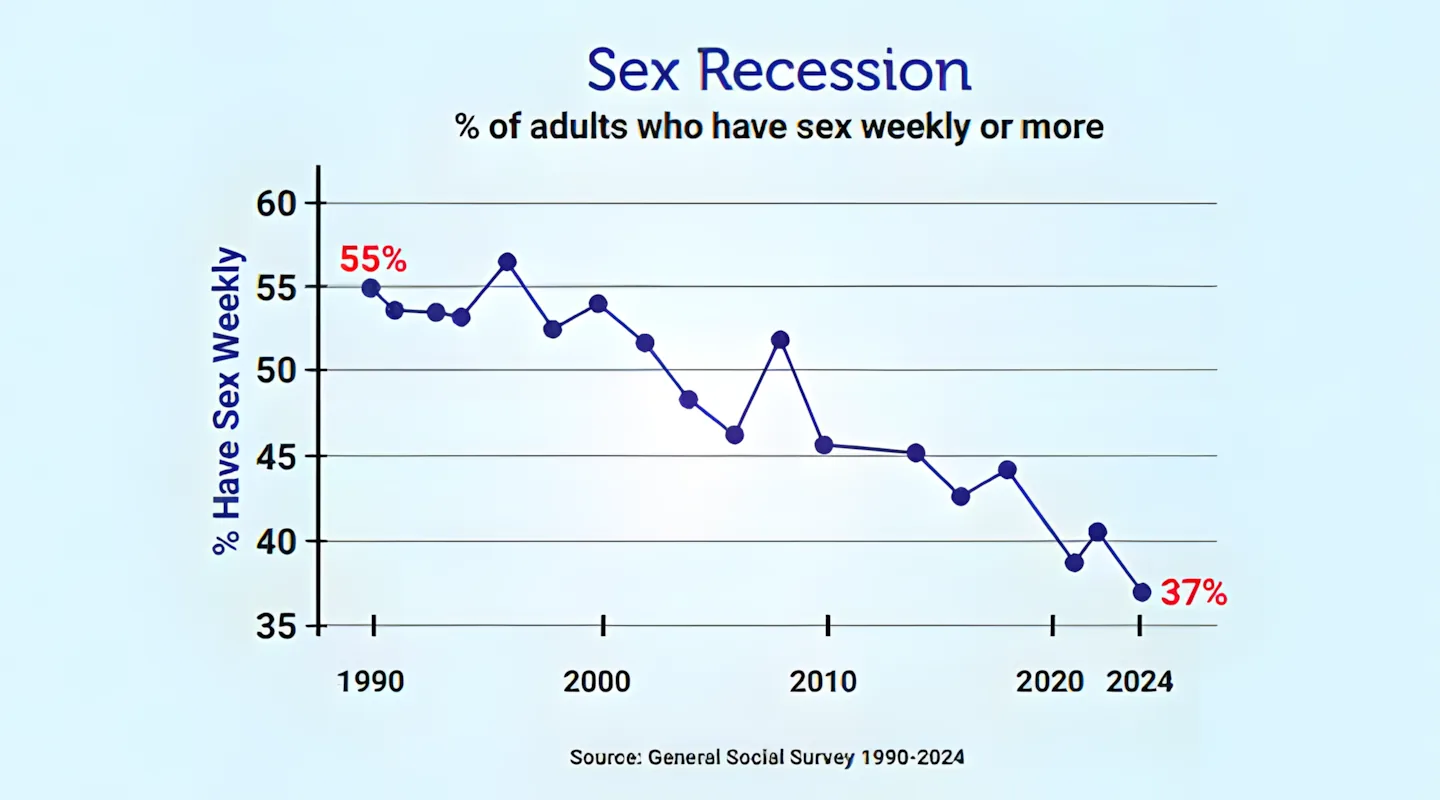
The Sex Recession
The numbers are striking. Among high school students in the United States, the share who report ever having had sex fell from 54 percent in the early 1990s to 37 percent in 2024 (CDC, 2020; General Social Survey, 2025)ReferencesCenters for Disease Control and Prevention. (2020). Youth Risk Behavior Survey data summary & trends report: 2009–2019. U.S. Department of Health and Human Services. | General Social Survey. (2025). Get the data. NORC at the University of Chicago.. That means newly graduating high school students are 30% less likely to have ever had sex, compared to just one generation before. The trend continues well into adulthood. People now in their twenties are roughly 2.5 times as likely to be sexually abstinent as young adults were a generation earlier. About 15% report having had no sexual partner at all since they became adults (Julian, 2018)ReferenceJulian, K. (2018, December). The sex recession. The Atlantic.. Sexual declines are especially steep among young men. From 2000 to 2018, the percentage of young men who haven't had sex in the past year rose from 19% to 31%.
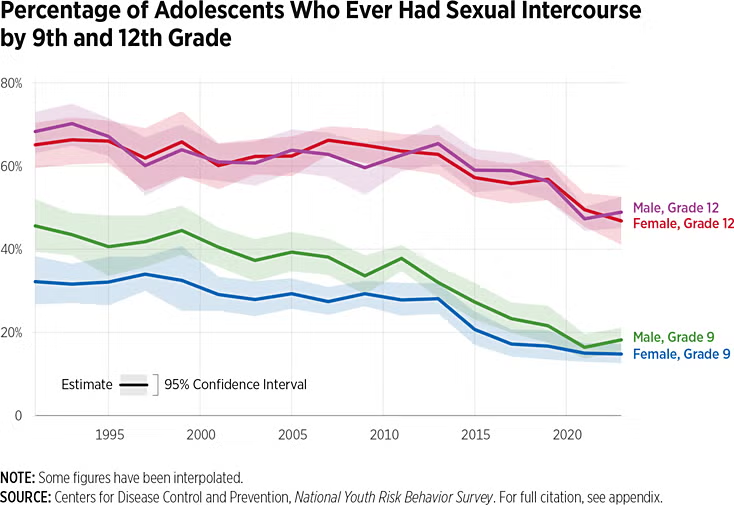
When young people are having sex, they're doing it less often. Americans had sex about 9 fewer times per year in the early 2010s than in the late 1990s, and the latest data shows this downward trend hasn't stopped (Twenge, Sherman, & Wells, 2017)ReferenceTwenge, J. M., Sherman, R. A., & Wells, B. E. (2017). Declines in sexual frequency among American adults, 1989–2014. Archives of Sexual Behavior, 46(8), 2389–2401.. It would seem that even couples have found better things to do with their time than have sex. Commentators have called the pattern a "sex recession."
Why would this be happening? Researchers have tested a number of explanations, and the interesting answer is that no single cause explains it; rather, it's a culmination of many interacting factors. One careful analysis found that the decline in young adults having sex is mostly explained by (Lei & South, 2021)ReferenceLei, L., & South, S. J. (2021). Explaining the decline in young adult sexual activity in the United States. Journal of Marriage and Family, 83(1), 280–295.:
- Fewer young people are in romantic relationships than at any point in the past 100 years.
- Young people are drinking less alcohol, which has had the largest impact in reducing sexual encounters for women.
- Young men are spending more time playing video games. Yes, that's right, playing video games is directly related to having less sex for men.
- Young adults are more likely to live with their parents, putting a damper on their sex lives.
- Young men make less money than past generations, creating financial pressures that discourage them from dating and starting families.
I've listed these factors by the amount they've impacted young people's sex lives, with the first factor being the most impactful. Declines in romantic relationships are believed to account for about a third of the drop in sex among young people.
Notice how many of these are not about sex at all. They are about the ordinary conditions that used to bring young people into contact with one another — a night out, a shared apartment, a paycheck that buys dinner for two. When those conditions thin out, so do opportunities for sex. A newer wrinkle is technology that substitutes human contact directly. A 2025 survey found that nearly 1 in 5 U.S. adults reported having chatted with an artificial intelligence system designed to act like a romantic partner, a figure that rose to roughly 1 in 3 among young men (Wheatley Institute, 2025)ReferenceWheatley Institute. (2025). Counterfeit connections: AI romantic companions. Brigham Young University..
Is the sex recession a problem? Opinions differ. Less casual sex among young people means fewer unintended pregnancies and sexually transmitted infections, which is clearly a good thing. But some researchers worry that less sexual and romantic connection during these formative years could have lasting negative impacts on this generation's happiness and health. The trend is probably best understood as a signal of how profoundly the social world has changed for young people in a single generation.
Casual Sex and Hooking Up
Even with the overall decline, casual sex remains a familiar part of young-adult life. Hooking upHooking upA sexual encounter, ranging from kissing to intercourse, between people who are not in a romantic relationship and who do not necessarily expect one.View in glossary → refers to a sexual encounter between people who are not in a romantic relationship (Paul, McManus, & Hayes, 2000)ReferencePaul, E. L., McManus, B., & Hayes, A. (2000). "Hookups": Characteristics and correlates of college students' spontaneous and anonymous sexual experiences. The Journal of Sex Research, 37(1), 76–88.. Hookups are common on college campuses. In one widely cited review, around 60% of college students reported having hooked up at least once (Garcia et al., 2012)ReferenceGarcia, J. R., Reiber, C., Massey, S. G., & Merriwether, A. M. (2012). Sexual hookup culture: A review. Review of General Psychology, 16(2), 161–176..
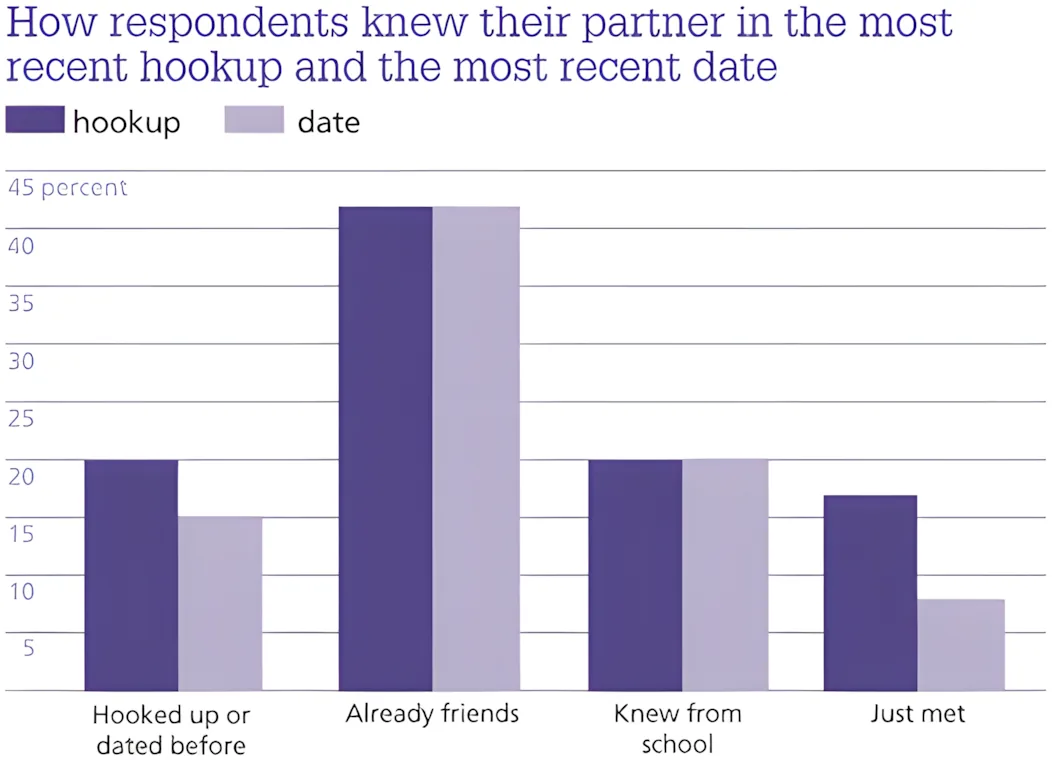
How do people feel after hooking up? The honest answer depends mostly on why they did it. Research consistently finds that hookups motivated by what psychologists call autonomous reasons — curiosity, genuine desire, a wish to explore — tend to leave people feeling good with their choices. Hookups driven by non-autonomous reasons — pressure from friends, a hope that casual sex will turn into a relationship, or the effects of alcohol — are more likely to be followed by lowered self-esteem, anxiety, and regret (Vrangalova, 2015)ReferenceVrangalova, Z. (2015). Hooking up and psychological well-being in college students: Short-term prospective links across different hookup definitions. The Journal of Sex Research, 52(5), 485–498.. Casual sex, on average, is associated with a modest dip in well-being, but that average hides a lot of variation between people who wanted the experience and people who felt pressured into it (Bersamin et al., 2014)ReferenceBersamin, M. M., et al. (2014). Risky business: Is there an association between casual sex and mental health among emerging adults? The Journal of Sex Research, 51(1), 43–51..
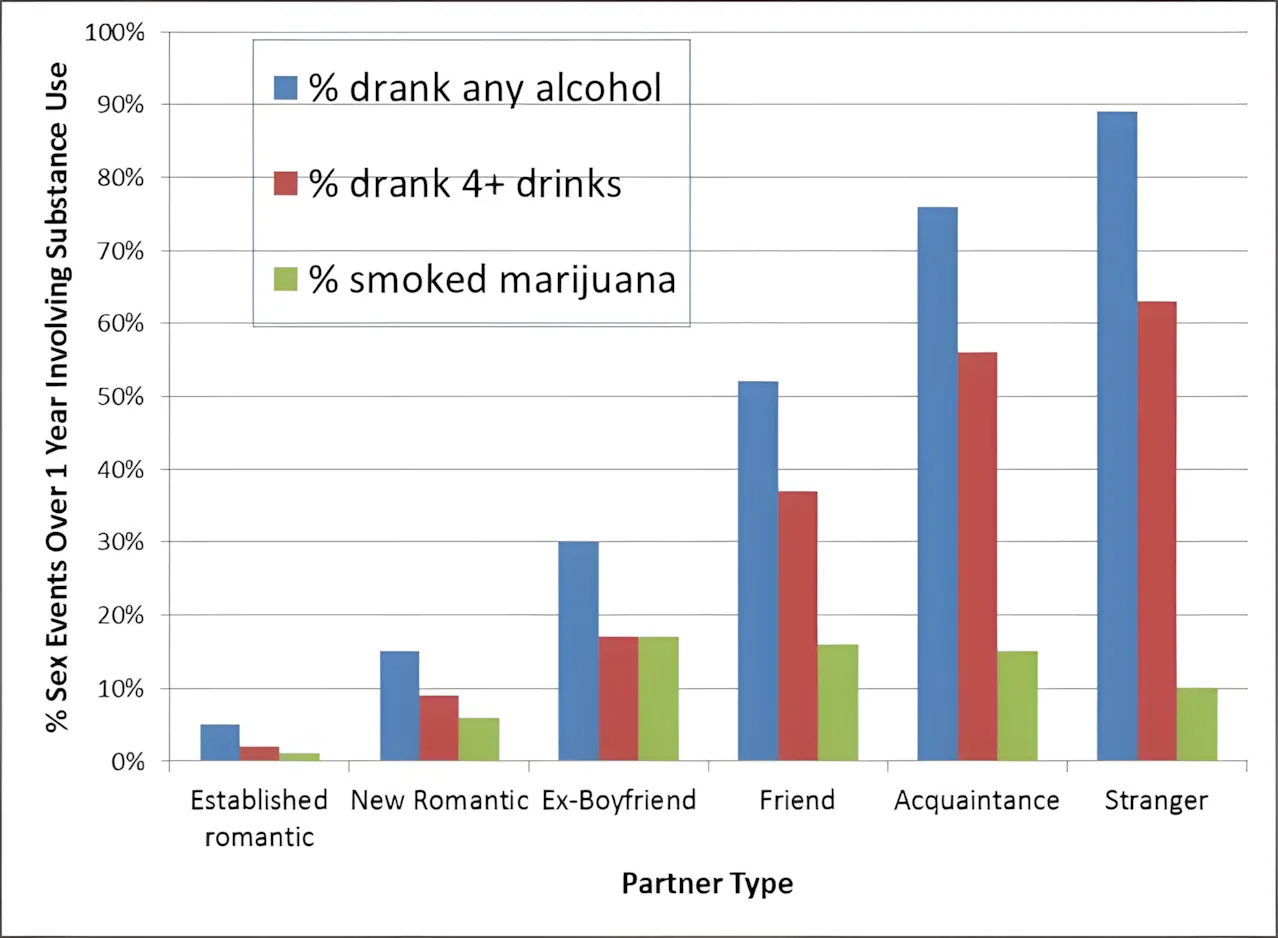
Alcohol deserves special mention, because it sits at the center of much hookup culture and often complicates consent. In one survey, about 30 percent of students who hooked up while drinking said they would not have done so sober (LaBrie et al., 2014)ReferenceLaBrie, J. W., Hummer, J. F., Ghaidarov, T. M., Lac, A., & Kenney, S. R. (2014). Hooking up in the college context: The event-level effects of alcohol use and partner familiarity on hookup behaviors and contentment. The Journal of Sex Research, 51(1), 62–73.. And hookups are the setting for a disproportionate amount of coerced sex. One study found that the large majority of coerced sexual encounters among college students happened during hookups (Flack et al., 2007)ReferenceFlack, W. F., Jr., et al. (2007). Risk factors and consequences of unwanted sex among university students: Hooking up, alcohol, and stress response. Journal of Interpersonal Violence, 22(2), 139–157.. This can include feeling pressured to have sex or being forced to.
Across the board, casual sex tends to be less satisfying for women than sex in a committed relationship. One well-documented finding is that women are far less likely to reach orgasm in a hookup than men are, while that orgasm gapOrgasm gapThe finding that women are much less likely than men to reach orgasm during a casual hookup, a gap that narrows considerably when sex occurs within a committed relationship.View in glossary → shrinks considerably when sex happens in a committed relationship (Armstrong et al., 2012)ReferenceArmstrong, E. A., England, P., & Fogarty, A. C. K. (2012). Accounting for women's orgasm and sexual enjoyment in college hookups and relationships. American Sociological Review, 77(3), 435–462.. None of this makes casual sex inherently harmful. It does suggest that the context of sex — who you are with, why, and how well you communicate — shapes the experience at least as much as the act itself.
Jordan, a college sophomore, hooks up with someone at a party mainly because friends kept teasing that Jordan was "the only one who never does," and after several drinks it seemed easier to go along. Based on the research on casual sex, which outcome is most likely?
Friends-with-Benefits
Between the one-time hookup and the committed relationship sits a middle option: friends-with-benefitsFriends-with-benefitsAn ongoing sexual relationship between two people who are friends but not romantic partners, and who agree to keep it that way. Partners often want different things from the arrangement.View in glossary → (FWB). Such arrangements tend to be ongoing sexual relationships between friends who agree, at least on the surface, to keep it that way (Hughes, Morrison, & Asada, 2005)ReferenceHughes, M., Morrison, K., & Asada, K. J. K. (2005). What's love got to do with it? Exploring the impact of maintenance rules, love attitudes, and network support on friends with benefits relationships. Western Journal of Communication, 69(1), 49–66.. These arrangements are common, with around 40% of women and 50% of men reporting having a FWB at some point (Bisson & Levine, 2009; Olmstead et al., 2026)ReferencesBisson, M. A., & Levine, T. R. (2009). Negotiating a friends with benefits relationship. Archives of Sexual Behavior, 38(1), 66–73. | Olmstead, S. B., LeFebvre, L. E., & Allen, M. (2026). A meta-analysis of friends with benefits relationships. Archives of Sexual Behavior, 55(3), 1045–1067.. They tend to come with unspoken rules, the two most common being not to fall in love and not to tell too many mutual friends.
The trouble is that the two people often want different things from the arrangement. In a survey of adults currently in a FWB relationship, most women said they wanted the situation to change — either to become a full romantic relationship or to return to a friendship without sex — while most men said they wanted things to stay exactly as they were. Only about a third of the women reported being satisfied with the arrangement as it stood, roughly half the rate of the men (Lehmiller, VanderDrift, & Kelly, 2011)ReferenceLehmiller, J. J., VanderDrift, L. E., & Kelly, J. R. (2011). Sex differences in approaching friends with benefits relationships. The Journal of Sex Research, 48(2–3), 275–284..
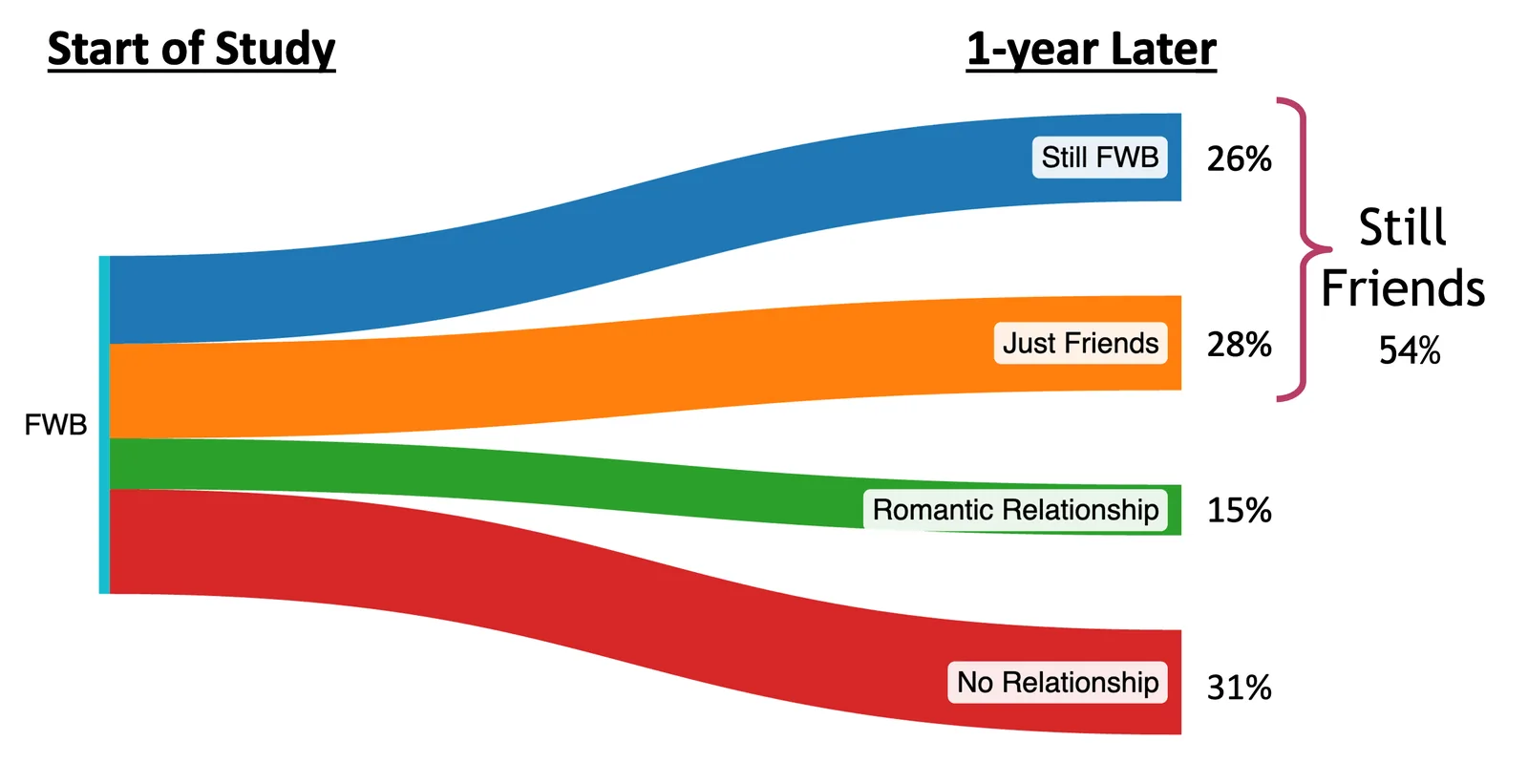
Researchers followed FWB couples over time and found that, over the course of 1 year, about half remained friends, 15% formed a romantic relationship, and about a third fell out of friendship entirely (Lehmiller, VanderDrift, & Kelly, 2011)ReferenceLehmiller, J. J., VanderDrift, L. E., & Kelly, J. R. (2011). Sex differences in approaching friends with benefits relationships. The Journal of Sex Research, 48(2–3), 275–284.. This is encouraging news for people who may worry that FWB arrangements ruin friendships. In a majority of cases, entering into a FWB relationship didn't harm the core relationship that couples started out with. However, if you enter into a FWB arrangement with the expectations of it turning romantic, you're likely to be disappointed (see also Owen & Fincham, 2012)ReferenceOwen, J., & Fincham, F. D. (2012). Friends with benefits relationships as a start to exclusive romantic relationships. Journal of Social and Personal Relationships, 29(7), 982–996..
Dating in a Digital World
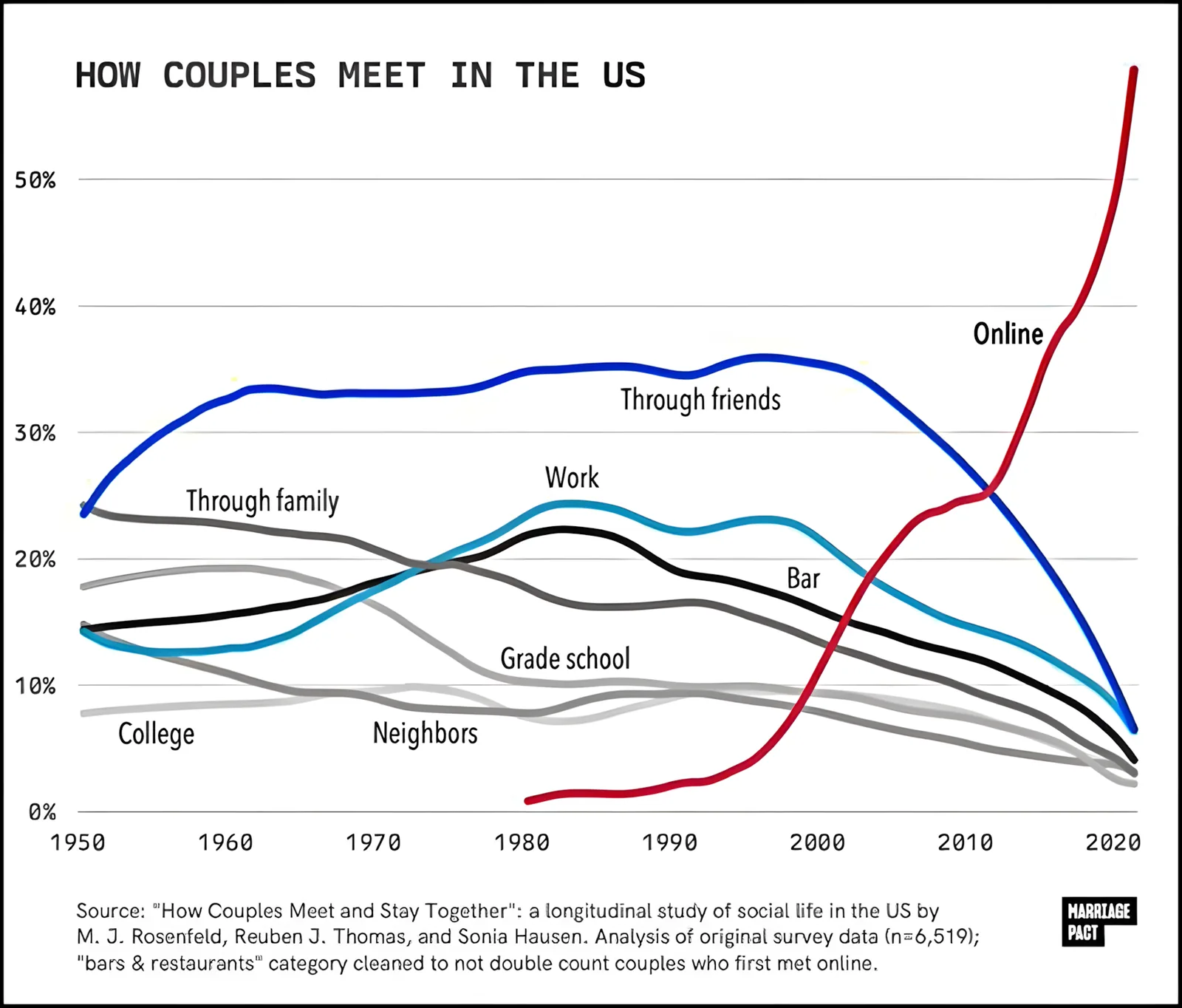
For today's young adults, meeting a partner increasingly means opening an app. For better or worse, dating apps have become the dominant platform that young people use to date and find new sexual partners (Vogels, 2020)ReferenceVogels, E. A. (2020). The virtues and downsides of online dating. Pew Research Center.. The experience is decidedly mixed. Many users describe dating apps as frustrating and say the process leaves them feeling less confident rather than more.
Because app users are evaluated based mostly on a handful of photos, the experience amplifies social comparison and self-objectification. Users effectively learn to view themselves and others as "rateable" ("Am I a 7 or a 3?") and easily replaceable. Systematic reviews have found that using dating apps is linked with less satisfaction with one's body and lower self-esteem (Bowman et al., 2025; Holtzhausen et al., 2020; Lo Coco et al., 2026)ReferencesBowman, Z., et al. (2025). Dating apps and their relationship with body image, mental health and wellbeing: A systematic review. Computers in Human Behavior, 165, 108515. | Holtzhausen, N., et al. (2020). Swipe-based dating applications use and its association with mental health outcomes. BMC Psychology, 8, 8. | Lo Coco, G., et al. (2026). Investigating the relation between social media, dating app use and body image dimensions. British Journal of Health Psychology, 31(2), e70067.. The constant possibility of rejection is a defining feature of using these apps. A majority of users report fatigue with using dating apps over time, often giving up on the experience within a few years (Sharabi, Von Feldt, & Ha, 2026)ReferenceSharabi, L. L., Von Feldt, P. A., & Ha, T. (2026). Burnt out and still single: Susceptibility to dating app burnout over time. New Media & Society. Advance online publication..
Harassment is another serious downside. Among young women who use dating apps, nearly half report having been sent sexually explicit images (e.g., "dick pics") or sexually explicit messages they did not ask for (Vogels, 2020)ReferenceVogels, E. A. (2020). The virtues and downsides of online dating. Pew Research Center.. About 1 in 3 report being called an offensive name, and around 13% report being physically threatened by someone they encountered on a platform. These are not rare glitches in the system; they are common enough to shape how many women approach online dating in the first place.
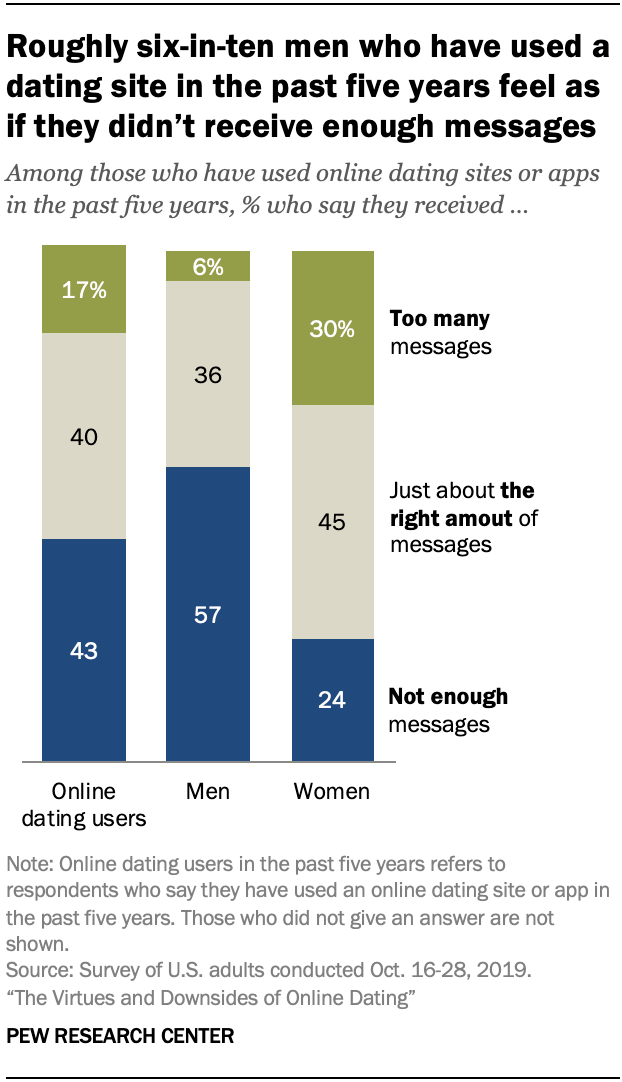
Most men find the experience of using dating apps disappointing at best. Several analyses have found that the vast majority of men get virtually no messages or reciprocal attention on dating apps, with a small majority of men getting the vast majority of attention. By some estimates, the top 20% of men get 80% of attention (Bruch & Newman, 2018)ReferenceBruch, E. E., & Newman, M. E. J. (2018). Aspirational pursuit of mates in online dating markets. Science Advances, 4(8), eaap9815.. Pew Research Center found that among recent online-dating users, 64% of men reported feeling insecure because of the lack of messages they received (versus about 40% of women), while the pattern reversed for feeling overwhelmed by messages (54% of women vs. ~25% of men) (Vogels, 2020)ReferenceVogels, E. A. (2020). The virtues and downsides of online dating. Pew Research Center..
It's not all bad news for dating apps, though. For many LGBT+ people, dating apps have greatly expanded their opportunities for sex and romantic relationships (Rosenfeld et al., 2019)ReferenceRosenfeld, M. J., Thomas, R. J., & Hausen, S. (2019). Disintermediating your friends: How online dating in the United States displaces other ways of meeting. PNAS, 116(36), 17753–17758.. LGBT+ people are about twice as likely to use dating apps, compared to heterosexual and cisgender people (Byron et al., 2021)ReferenceByron, P., Albury, K., & Pym, T. (2021). Hooking up with friends: LGBTQ+ young people, dating apps, friendship and safety. Media, Culture & Society, 43(3), 497–514.. LGBT+ people often face stigma and extra stressors that complicate traditional, face-to-face courtship. Platforms provide a lower-stakes environment to safely filter for compatible partners without fear of hostility (Cargnino & Lemke, 2023)ReferenceCargnino, M., & Lemke, R. (2023). Online dating site use to cope with minority stress in gay and bisexual men in Germany. International Journal of Sexual Health, 35(3), 383–398.. Furthermore, digital matchmaking leads to long-term success for many LGBT+ people, with about 30% of partnered LGBT+ adults reporting they met their current significant other online (Brown, 2020)ReferenceBrown, A. (2020, April 9). Lesbian, gay and bisexual online daters report positive experiences — but also harassment. Pew Research Center..
A friend says, "Dating apps are amazing — everyone's on them and everyone loves them." Which statement best reflects what the evidence shows?
11.2 Coupling, Cohabitation, and Marriage
Eventually many people move from casual or short-term connections toward something more lasting. But the path into committed partnership looks different than it did for earlier generations. People are marrying later, marrying less, and increasingly living together outside of marriage.
Marrying Later, and Marrying Less
Marriage in the United States has been getting later and less universal for decades. The overall marriage rate for adults has drifted down to around half of the adult population, an eight-point drop since 1990 (Geiger & Livingston, 2020)ReferenceGeiger, A. W., & Livingston, G. (2020). 8 facts about love and marriage in America. Pew Research Center.. More people are also skipping marriage entirely. By 2018, a record 35 percent of American adults had never been married, compared with just 9 percent in 1970 (Wang, 2020)ReferenceWang, W. (2020). More than one-third of U.S. adults have never been married. Institute for Family Studies..
Why the delay? Many want to finish their education and get established in a career first. Many do not feel financially ready. And the social pressure to marry young has eased, so that staying single into one's late twenties or thirties no longer carries the stigma it once did. In earlier eras, marriage was often the entry point into adult independence. Today, many young people treat their twenties as a time to establish that independence before marrying.
A demographer observes that Americans today marry later and less often than they did in 1970. Which explanation best fits the research?
Living Together First
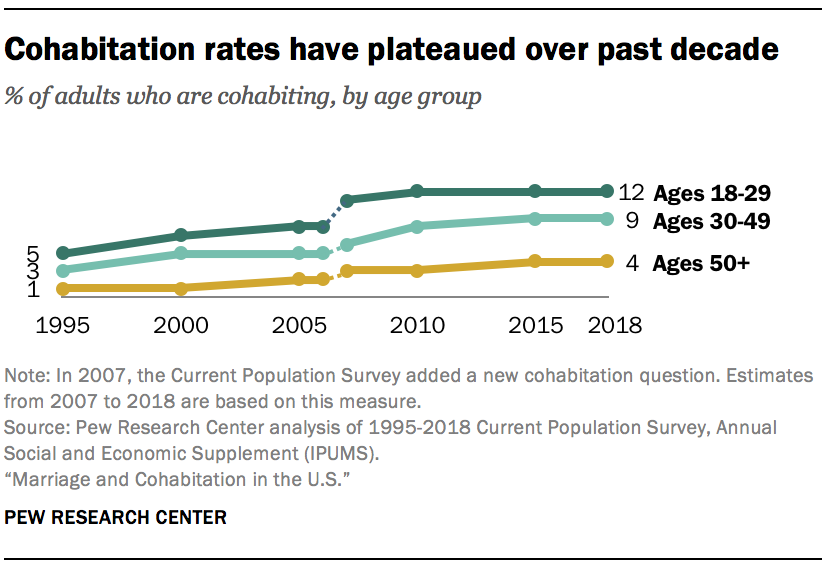
Given fewer people are getting married, more are choosing to live together outside of marriage. CohabitationCohabitationAn unmarried couple living together in a romantic, sexually intimate relationship. It has become a common step before, or instead of, marriage.View in glossary → — an unmarried couple sharing a household — has become a normal step rather than a scandalous one. Today most couples live together before marriage, with roughly 60% cohabiting (Horowitz, Graf, & Livingston, 2019)ReferenceHorowitz, J. M., Graf, N., & Livingston, G. (2019). Marriage and cohabitation in the U.S. Pew Research Center.. When people are asked why they moved in together, the reasons are practical and emotional: to save money and share expenses, to spend more time together, to get to know their partner better, and, for some, to test whether or not they should get married (Blasutto, 2020)ReferenceBlasutto, B. (2020). Cohabitation versus marriage: Relationship quality across Europe..
Is it a good idea to cohabit before marriage? For many, it seems like a logical preceding step before tying the knot. But, research shows that cohabiting for reasons of convenience or finances can make couples more at risk for divorce if they do get married (Copen, Daniels, & Mosher, 2012)ReferenceCopen, C. E., Daniels, K., & Mosher, W. D. (2012). First marriages in the United States: Data from the 2006–2010 National Survey of Family Growth. National Health Statistics Reports, (49), 1–21.. Cohabitation is especially risky when couples move in together very young. Cohabitation makes it more likely that couples will "slide into" marriage; not because they truly want to be married, but because it's the expected next step after cohabitation.

Researchers who study this have a useful phrase for the underlying issue: sliding versus decidingSliding versus decidingThe idea that couples often move through major relationship transitions, such as moving in together, by drifting into them gradually rather than making a conscious choice, which can build momentum (inertia) that carries them into marriage.View in glossary →. Moving in together is often something couples slide into gradually — a toothbrush left behind, then a drawer, then a shared lease — rather than a deliberate decision about the future. Once a couple has merged their finances, furniture, and daily routines, the sheer inconvenience of separating can carry them forward into marriage with a partner they might otherwise have left, a momentum researchers call inertia (Stanley, Rhoades, & Markman, 2006)ReferenceStanley, S. M., Rhoades, G. K., & Markman, H. J. (2006). Sliding versus deciding: Inertia and the premarital cohabitation effect. Family Relations, 55(4), 499–509.. Making the decision to live with a romantic partner is (and should be) a big decision that requires much deliberation. It's not just something to drift into.
A student argues, "Everyone knows couples who live together before marriage are more likely to get divorced." Based on the research, what is the best response?
11.3 Sex in Long-Term Relationships
In the early days of a relationship, desire often feels effortless and constant. Years later, the same couple who could not keep their hands off each other may find that sex has become infrequent, or has to be scheduled around work and childcare duties. This is not a sign that something has gone wrong. It is one of the most predictable patterns in all of relationship science.
The Honeymoon and What Comes After
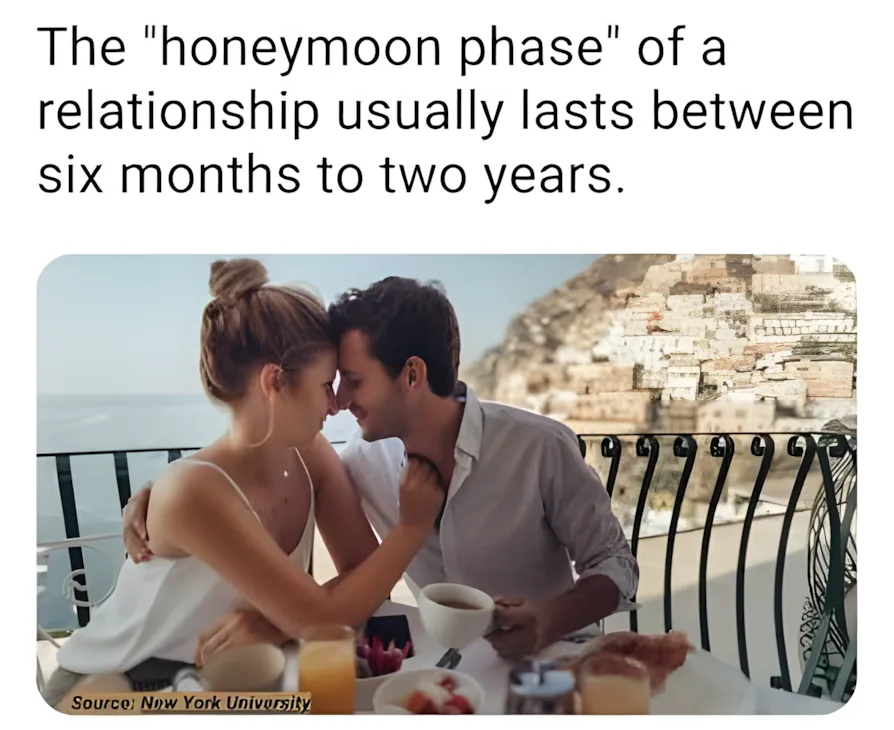
Marriage often begins with a burst of happiness. In the months right after the wedding, couples tend to report unusually high satisfaction, buoyed by novelty and optimism. But study after study following couples over time finds that this glow fades. Elevated satisfaction typically begins to taper within the first 6–12 months. By around the second year, most couples have settled back toward a more ordinary baseline or begun a slow decline (Kurdek, 1998; Huston et al., 2001)ReferencesKurdek, L. A. (1998). The nature and predictors of the trajectory of change in marital quality for husbands and wives over the first 10 years of marriage. Developmental Psychology, 34(5), 1033–1046. | Huston, T. L., Caughlin, J. P., Houts, R. M., Smith, S. E., & George, L. J. (2001). The connubial crucible: Newlywed years as predictors of marital delight, distress, and divorce. Journal of Personality and Social Psychology, 80(2), 237–252.. This happens to virtually all couples, and knowing that can help prevent disappointment after marriage.
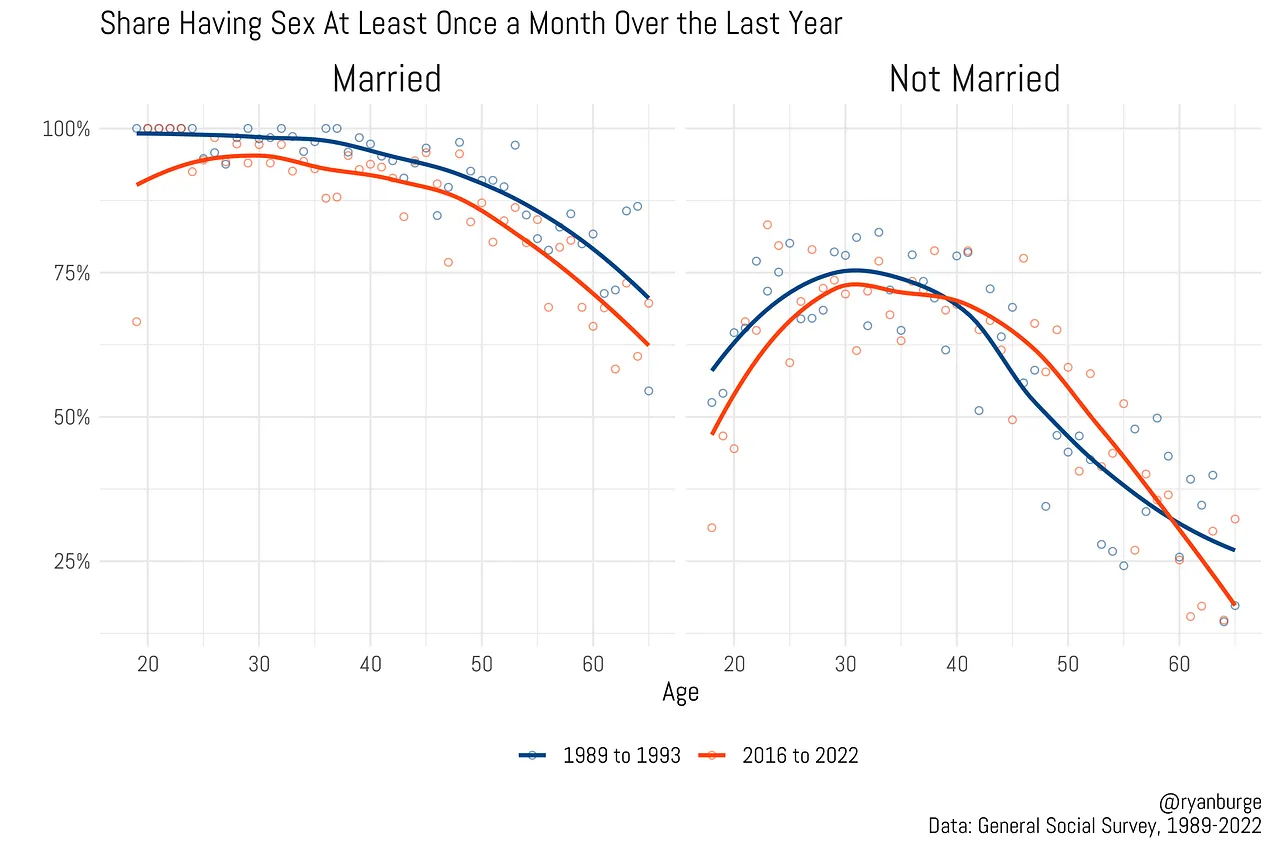
Sexual frequency tends to be highest in the first year of a relationship. After that, it's natural for sexual frequency to decline, often with a noticeable drop somewhere 5–10 years in (Call, Sprecher, & Schwartz, 1995)ReferenceCall, V., Sprecher, S., & Schwartz, P. (1995). The incidence and frequency of marital sex in a national sample. Journal of Marriage and the Family, 57(3), 639–652.. The good news, which is easy to miss, is that some couples do sustain strong desire and even intense love over the long haul. Long-term passionate love is not a myth, but it takes effort, communication and setting accurate expectations (O'Leary et al., 2012)ReferenceO'Leary, K. D., Acevedo, B. P., Aron, A., Huddy, L., & Mashek, D. (2012). Is long-term love more than a rare phenomenon? If so, what are its correlates? Social Psychological and Personality Science, 3(2), 241–249..
Sexual Habituation
Why does desire tend to cool with a familiar partner? A large part of the answer is a basic feature of how brains and bodies respond to repeated experiences. Sexual habituationSexual habituationThe gradual weakening of sexual arousal and interest that results from repeated exposure to the same partner over time, driven by the fading of novelty rather than by any real loss of attractiveness.View in glossary → is the gradual weakening of sexual arousal and interest that comes from repeated exposure to the same partner over time. It is not about a partner becoming less attractive in any objective sense; it is about novelty wearing off.
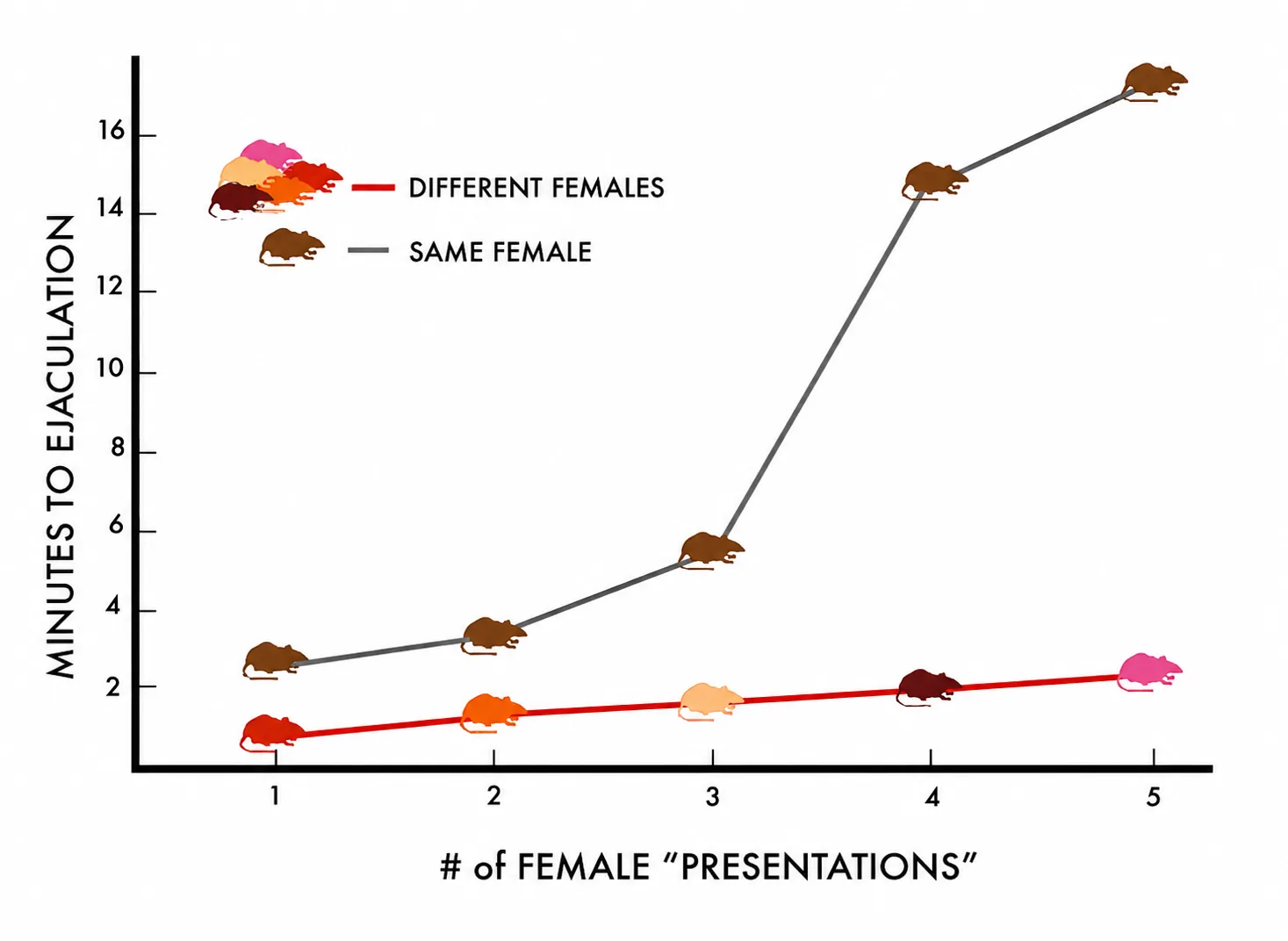
This effect is not unique to humans. In fact, it shows up across most of the animal kingdom. The Coolidge effectCoolidge effectThe renewal of sexual interest, seen in many animal species and in humans, when a new sexual partner is introduced, even after an individual seems sexually satisfied with a current partner.View in glossary → is the tendency for sexual interest to be renewed when a new partner is introduced. This was first discovered in rats. When scientists paired male and female rats together to mate, they noticed that the males tended to have lots of sex with their assigned female for the first few days, but then seemed to lose interest. Once the male was placed in a cage with a new female, their sexual vigor instantly returned.
Human beings show their own version of this. In one study, heterosexual men who repeatedly viewed images of the same women rated those women as progressively less attractive over time (Sculley & Watkins, 2022)ReferenceSculley, J., & Watkins, C. D. (2022). The great porn experiment V2.0: Sexual arousal reduces the salience of familiar women when heterosexual men judge their attractiveness. Archives of Sexual Behavior, 51(6), 3071–3082.. This corresponded with less brain activity in areas related to sexual arousal. Reviews of the research on partner novelty find that new partners reliably heighten arousal in a way that familiar ones do not. Brain-imaging work links repeated exposure to a partner with reduced activity in the brain's reward and pleasure circuits (Morton & Gorzalka, 2015)ReferenceMorton, H., & Gorzalka, B. B. (2015). Role of partner novelty in sexual functioning: A review. Journal of Sex & Marital Therapy, 41(6), 593–609..
Most relationships in modern Western culture are built on monogamyMonogamyBeing partnered with only one person at a time. In serial monogamy, a person has one exclusive partner, then another, over the course of life.View in glossary →, being sexually and romantically partnered with only one person at a time. But because arousal fades with familiarity, some people fall into a pattern of serial monogamySerial monogamyA pattern of having one exclusive partner at a time, but a series of such partners over a lifetime, rather than a single lifelong partner.View in glossary →: one exclusive partner, then another, then another over the course of a lifetime. When sexual excitement toward one partner cools, they seek the renewed spark of a new relationship.

This matches well with patterns of serial monogamy found in many species, particularly birds (Wright, 1994)ReferenceWright, R. (1994). The moral animal: The new science of evolutionary psychology. Pantheon Books.. Like humans, birds must raise extremely vulnerable young, which causes them to pair bond. But, these pair bonds run their course through a mating season and then are replaced with a new partner each year. It's likely that human ideals of monogamy gained traction around 10,000 years ago, primarily as a way for men to guarantee that they were raising their own children (de la Croix & Mariani, 2015; Schacht & Bell, 2016)Referencesde la Croix, D., & Mariani, F. (2015). From polygyny to serial monogamy: A unified theory of marriage institutions. The Review of Economic Studies, 82(2), 565–607. | Schacht, R., & Bell, A. V. (2016). The evolution of monogamy in response to partner scarcity. Scientific Reports, 6, 32472.. This is backed by genetic analyses that suggest humans were likely polyamorous prior to about 10,000 years ago (Le Page & Bhattacharya, 2023)ReferenceLe Page, M., & Bhattacharya, S. (2023). A few prehistoric men had all the children. New Scientist.. Most evolutionary psychologists agree that humans did not evolve to be monogamous (Schacht & Kramer, 2019)ReferenceSchacht, R., & Kramer, K. L. (2019). Are we monogamous? A review of the evolution of pair-bonding in humans and its contemporary variation cross-culturally. Frontiers in Ecology and Evolution, 7, 230.. Monogamy is a cultural concept, not a biological drive.
A couple in their eighth year of marriage worries that sex has become routine and less exciting than it used to be. Based on the research in this section, which explanation and suggestion fit best?
Keeping Desire Alive
If habituation is natural, is fading desire inevitable? Not entirely. Research on couples who maintain a satisfying sex life over many years points to a few recurring themes. A common thread is novelty and a sense of the partner as somewhat separate and mysterious rather than fully known. The therapist Esther Perel has argued that eroticism thrives on a degree of distance, uncertainty, and imagination (Perel, 2006)ReferencePerel, E. (2006). Mating in captivity: Unlocking erotic intelligence. HarperCollins.. Couples who keep passion alive often protect that spark deliberately. They try new activities together, spend time apart so that reunion carries excitement, and continue to see each other as objects of desire rather than dependable partners or co-parents. Consistent with this, one study found that couples who engaged in new, adventurous activities together at least a few times a year reported higher desire and more satisfying sex (Muise et al., 2019)ReferenceMuise, A., Harasymchuk, C., Day, L. C., Bacev-Giles, C., Gere, J., & Impett, E. A. (2019). Broadening your horizons: Self-expanding activities promote desire and satisfaction in established romantic relationships. Journal of Personality and Social Psychology, 116(2), 237–258.. Large surveys of couples with especially satisfying sex lives find they tend to prioritize sex, talk a lot about sex and their desire for each other, and continue to incorporate novelty and variety in their sex lives (Northrup, Schwartz, & Witte, 2013)ReferenceNorthrup, C., Schwartz, P., & Witte, J. (2013). The normal bar: The surprising secrets of happy couples and what they reveal about creating a new normal in your relationship. Harmony Books..

It also helps to adjust expectations about how desire itself works over the long haul. Early in a relationship, desire is often spontaneous and insistent. Later on, many people find their desire becomes more responsive, meaning it tends to show up after physical intimacy is already underway. Couples who understand this stop waiting to be struck by spontaneous lust and instead make room for closeness. They may set aside time to give each other a massage, a lingering kiss, a "date night." Arousal often follows. What looks like lost desire is sometimes just desire that now needs an invitation.
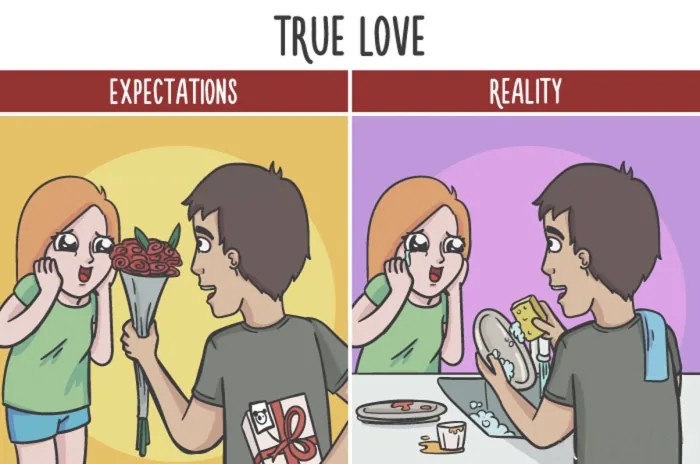
A related and very common challenge is not the loss of desire but a mismatch in it, sometimes called desire discrepancy. It is normal for two partners to want sex at different frequencies, and in most couples one person tends to consistently want it more often than the other. The trouble usually comes less from the difference itself than from how partners interpret it. The higher-desire partner may feel rejected, while the lower-desire partner may feel pressured or guilty for not wanting it more. Couples who navigate this well treat it as an ordinary difference to be worked out with warmth and compromise, rather than as a verdict on whether they still love each other.
When Children Arrive
Few events reshape a couple's sexual and romantic life as sharply as having children. On average, marital and sexual satisfaction dips after a couple has a baby. A well-known review of many studies found that parents report lower marital satisfaction than non-parents, and that satisfaction tends to fall further with each additional child (Twenge, Campbell, & Foster, 2003)ReferenceTwenge, J. M., Campbell, W. K., & Foster, C. A. (2003). Parenthood and marital satisfaction: A meta-analytic review. Journal of Marriage and Family, 65(3), 574–583.. Sexual frequency drops as well, often more than at any other point in a relationship.
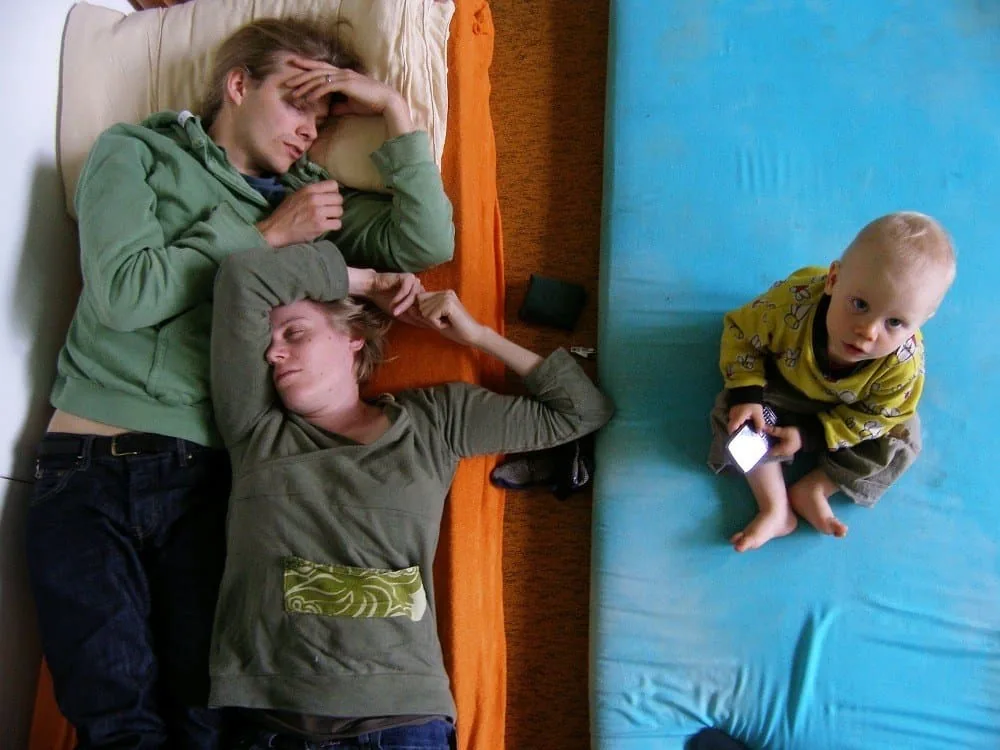
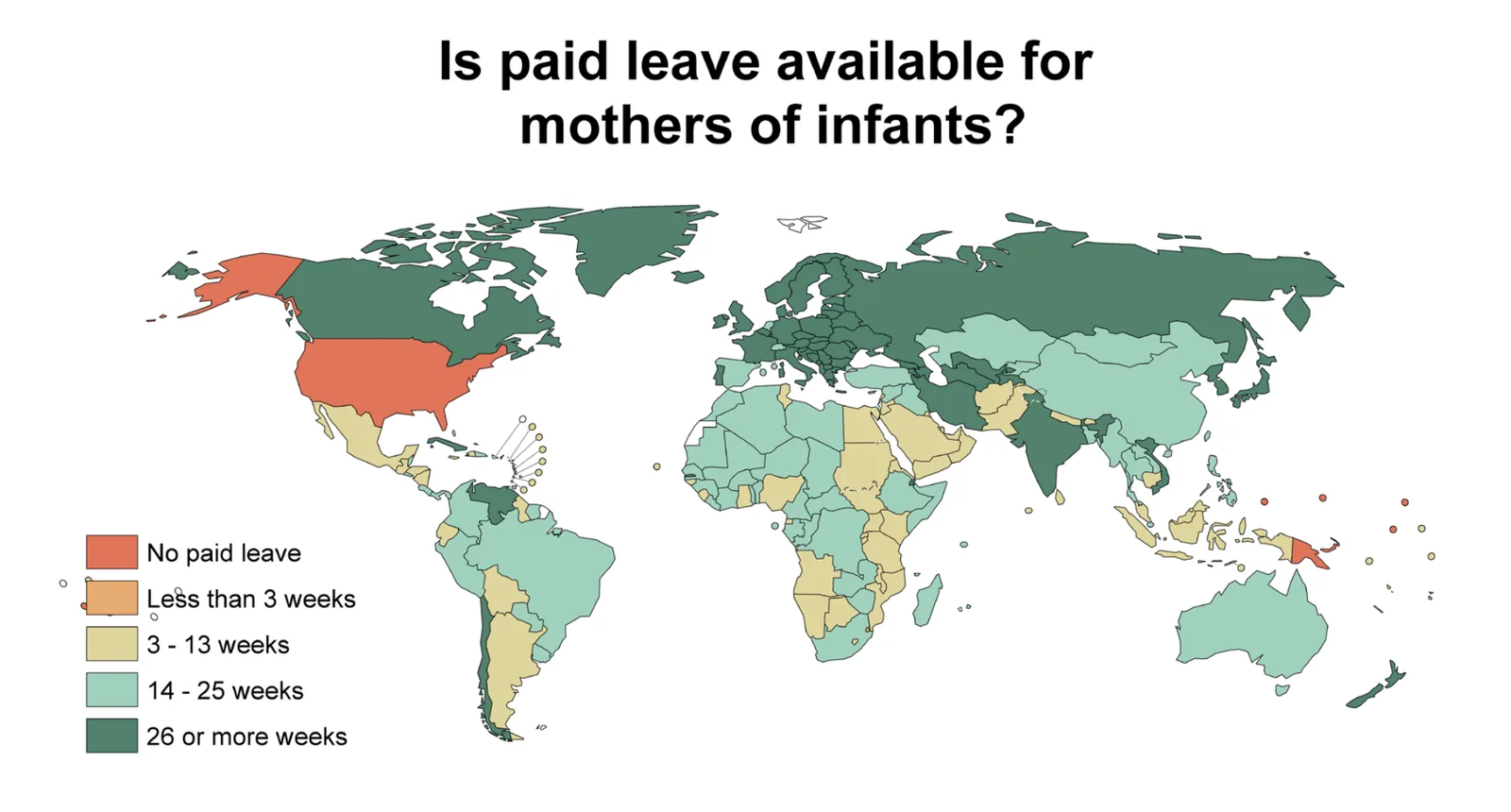
The reasons are not mysterious. New parents are exhausted, short on time and privacy, and stretched by a heavy new workload. In different-sex couples, mothers still tend to shoulder more of the childcare and housework than fathers, a mismatch that can strain both the relationship and the couple's sex life. Research finds that same-sex couples who on average divide labor more evenly tend to be happier and more sexually satisfied (Smith et al., 2026)ReferenceSmith, M., Bradbury, T., & Karney, B. (2026). Division of housework, sexual intimacy, and relationship quality in different-sex and same-sex couples. Journal of Marriage and Family. Advance online publication.. The strain of being parents is especially harsh in the United States, which remains one of the few wealthy countries in the world to not offer paid parental leave or subsidized childcare (Tramontano, 2025)ReferenceTramontano, M. K. (2025). A nation without leave: The U.S. vs. the world on paid parental leave. Syracuse Journal of International Law and Commerce.. In fact, 96% of the world's nations now offer some form of work relief for new parents, with the U.S. being notably absent from this list (WORLD Policy Analysis Center, 2023)ReferenceWORLD Policy Analysis Center. (2023, February). Paid leave for new parents [Policy brief]..
It would be easy to read all this as a simple case against having children, but the research shows that it's more of a trade-off. When people are asked to rate their moment-to-moment happiness during daily activities, time spent caring for children often ranks surprisingly low, below activities like socializing or even exercising (Kahneman et al., 2004)ReferenceKahneman, D., Krueger, A. B., Schkade, D. A., Schwarz, N., & Stone, A. A. (2004). A survey method for characterizing daily life experience: The day reconstruction method. Science, 306(5702), 1776–1780.. Yet having children also tends to give people a strong sense of meaning, which is not the same thing as moment-to-moment pleasure. Studies distinguishing a happy life from a meaningful one find that raising children can lower the former while raising the latter (Baumeister et al., 2013)ReferenceBaumeister, R. F., Vohs, K. D., Aaker, J. L., & Garbinsky, E. N. (2013). Some key differences between a happy life and a meaningful life. The Journal of Positive Psychology, 8(6), 505–516.. This helps explain a genuine paradox: many parents report that children made their days harder and their lives richer at the same time. Notably, roughly 1 in 5 U.S. adults say they do not want children at all, a choice that is becoming more common over recent years (Neal & Neal, 2021)ReferenceNeal, Z. P., & Neal, J. W. (2021). Prevalence and characteristics of childfree adults in Michigan (USA). PLOS ONE, 16(6), e0252528..
New parents Priya and Sam find they are having far less sex and feel more irritable with each other than before their baby arrived. Which interpretation is best supported by the research?
11.4 Divorce and Remarriage
Not every marriage lasts, and the ways marriages end, and what happens afterward, are their own important part of adult sexual life.
How Common Is Divorce?
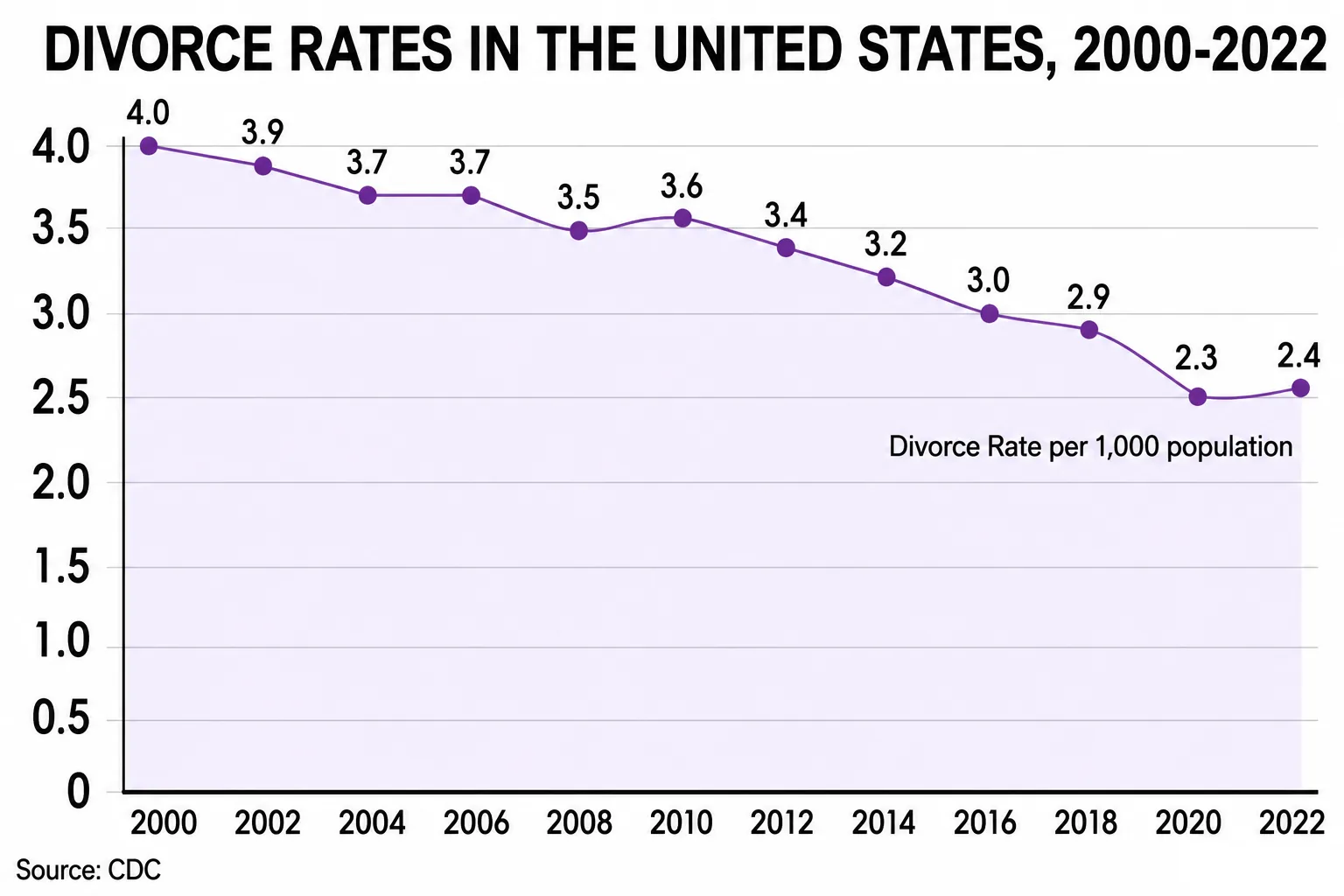
A familiar claim holds that half of all marriages end in divorce. The real figure is somewhat lower and has been changing over the last few decades. It's estimated that roughly 40% of first marriages in the United States end in divorce (Kennedy & Ruggles, 2014)ReferenceKennedy, S., & Ruggles, S. (2014). Breaking up is hard to count: The rise of divorce in the United States, 1980–2010. Demography, 51(2), 587–598.. Divorce rates have been falling since they peaked around 1980. Part of the reason for the decline circles back to earlier sections: Fewer people are marrying, and those who do marry are doing so later, when they are more educated and financially stable, both of which make divorce less likely.
When divorced people are asked why their marriages ended, the most common reasons are relational rather than anything dramatic. Falling out of love or growing apart, ongoing conflict, and sexual incompatibility top the list (Scott et al., 2013)ReferenceScott, S. B., Rhoades, G. K., Stanley, S. M., Allen, E. S., & Markman, H. J. (2013). Reasons for divorce and recollections of premarital intervention: Implications for improving relationship education. Couple and Family Psychology: Research and Practice, 2(2), 131–145.. Infidelity is also a frequent factor. InfidelityInfidelitySexual or romantic involvement with someone other than one's spouse or committed partner, in violation of the couple's agreement about exclusivity. Also called extramarital sex.View in glossary →, sometimes called extramarital sex, is sexual or romantic involvement with someone other than one's spouse or committed partner. Nationally representative data suggest that over a lifetime, roughly 20% of married men and 13% of married women report having had sex with someone other than their spouse (Wang, 2018)ReferenceWang, W. (2018). Who cheats more? The demographics of infidelity in America. Institute for Family Studies.. When infidelity is discovered in relationships, it leads to divorce about 30% of the time (Allen & Atkins, 2012)ReferenceAllen, E. S., & Atkins, D. C. (2012). The association of divorce and extramarital sex in a representative U.S. sample. Journal of Family Issues, 33(11), 1477–1493.. It may surprise people to learn that 70% of marriages that experience infidelity find a way to maintain their marriage.
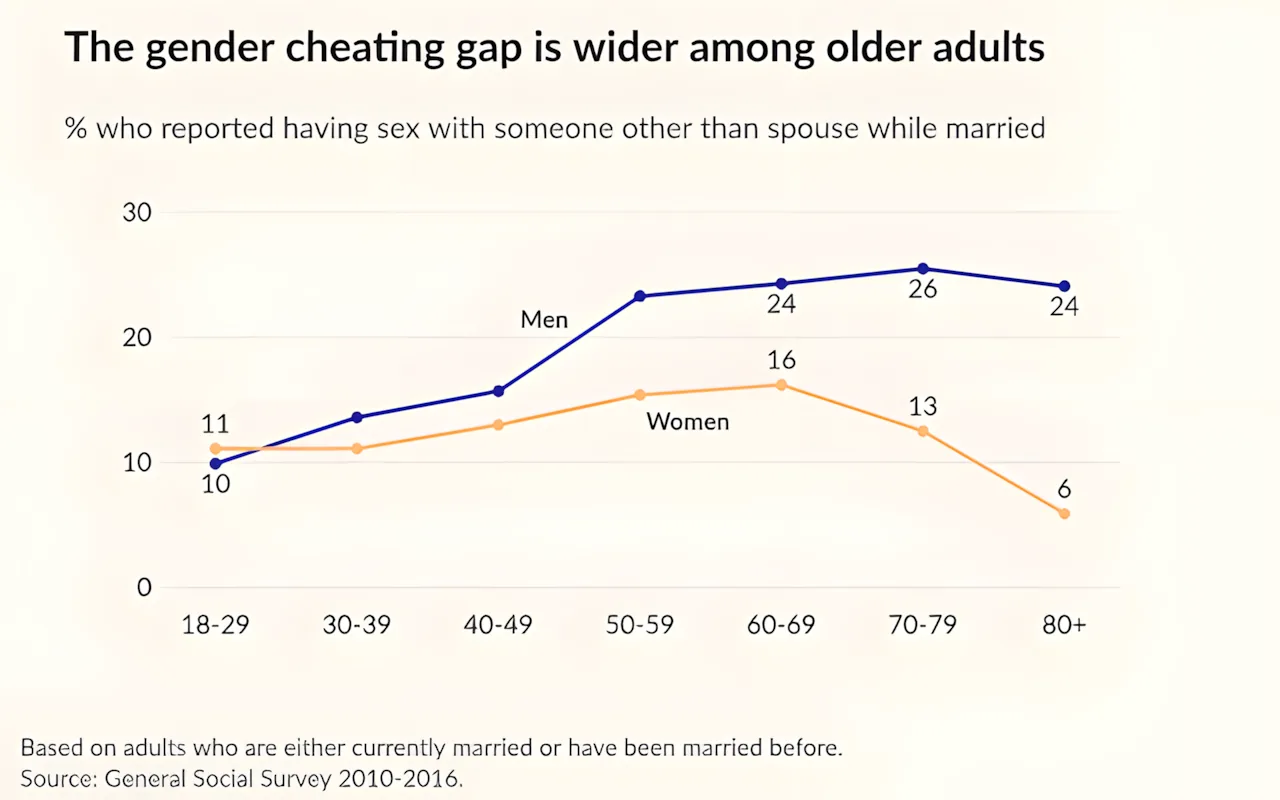
When divorced people are surveyed about why their marriage ended, which set of reasons tends to be reported most often?
After the Marriage Ends
Divorce is rarely the end of anyone's romantic story. Most divorced people go on to form new relationships, and many remarry. According to census data, about half of divorced people marry again within 5 years, and the rate is even higher for younger divorcees (Gurrentz & Mayol-García, 2021)ReferenceGurrentz, B., & Mayol-García, Y. (2021). Marriage, divorce and remarriage patterns in the United States. U.S. Census Bureau..
For many people, divorce means returning to a dating and sexual world that may have changed dramatically from what they remember. A newly single adult in their forties, fifties, or beyond often encounters a landscape transformed by dating apps and shifting expectations. They must rebuild sexual confidence and, frequently, revisit safer-sex practices that faded into the background during a long marriage. This transition can feel daunting. But many people describe it as a period of genuine rediscovery — a chance to explore their sexuality with the self-knowledge and clarity about what they want that age and experience tend to bring.

Remarriage also tends to be more complicated than a first marriage, which is part of why later marriages face a greater likelihood of divorce. Second marriages often involve children from previous relationships, ongoing financial obligations, and the work of blending two established households (Taibbi, 2024)ReferenceTaibbi, R. (2024, January). 5 risks for people marrying a second or third time. Psychology Today.. Rates of divorce for second marriages hover around 60–70%, with divorce rates increasing further for any marriages beyond that (Zahler, 2023)ReferenceZahler, C. (2023, January 20). What percentage of marriages end in divorce? Putting methods to the madness. Quantitative Methods in the Social Sciences, University of Michigan.. None of this makes remarriage hopeless. It does mean that couples entering a second marriage tend to benefit from realistic expectations and strong communication from the start.
Someone confidently states, "Half of all marriages end in divorce, and the rate keeps climbing." Which correction best fits the evidence?
11.5 Sexuality and Aging
Ask a room of young adults to picture the sex life of a 75-year-old and you will often get uncomfortable laughter. The common stereotype is that sex belongs to the young and that seniors are mostly sexless beings. The evidence says otherwise. Sexuality changes with age, but for many people it does not end. In fact, sexual satisfaction can remain high well into our senior years.
The Body Changes
Aging brings physical changes to sexual response and they differ somewhat by sex. For women, the central event is menopauseMenopauseThe permanent end of menstruation, usually in a woman's late forties or fifties, marked by a sharp decline in estrogen that can reduce vaginal lubrication and slow sexual arousal.View in glossary → — the permanent end of menstruation, usually in the late forties or fifties, marked by a sharp drop in the hormone estrogen. Lower estrogen thins the vaginal tissues and reduces natural lubrication, which can make intercourse uncomfortable without added lubricant, and arousal may build more slowly than it once did. For men, changes tend to be gradual rather than sudden: erections may take longer to achieve, require more direct stimulation, and be somewhat less firm, and the refractory periodRefractory periodThe recovery time after orgasm during which a man cannot become aroused enough to ejaculate again. It tends to lengthen with age.View in glossary → grows longer with age. Testosterone declines slowly over the decades as well. Erectile difficulties become more common with age; by their forties a meaningful share of men experience some degree of erectile difficulty, and the likelihood rises with each decade thereafter (Feldman et al., 1994)ReferenceFeldman, H. A., Goldstein, I., Hatzichristou, D. G., Krane, R. J., & McKinlay, J. B. (1994). Impotence and its medical and psychosocial correlates: Results of the Massachusetts Male Aging Study. The Journal of Urology, 151(1), 54–61..
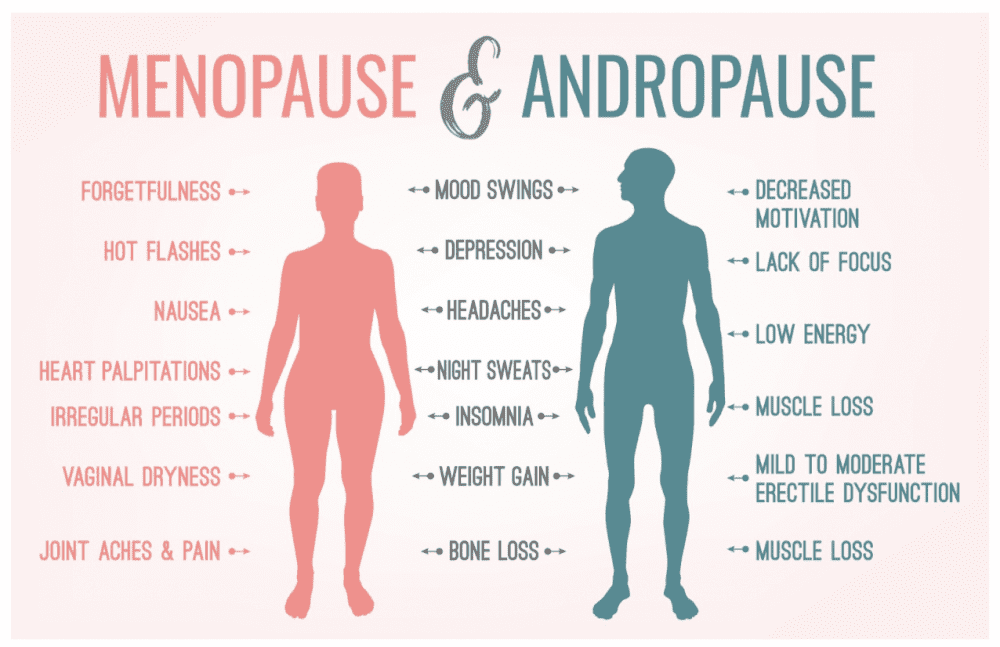
None of these changes mean the end of a satisfying sex life. They mean that sex in later life often works best when partners adapt. This can include allowing more time for foreplay, using lubricant, focusing on a broader range of touch and intimacy rather than intercourse alone, and, where helpful, using medical treatments now widely available for problems like erectile difficulty.
A 58-year-old woman notices that since menopause, intercourse has become less comfortable and arousal takes longer than it used to. Which explanation and response best fit the biology described in this chapter?
Sex Among Older Adults
Most adults in their late 50s and early 60s remain sexually active, as are a sizeable minority of people in their 70s (Lindau et al., 2007)ReferenceLindau, S. T., Schumm, L. P., Laumann, E. O., Levinson, W., O'Muircheartaigh, C. A., & Waite, L. J. (2007). A study of sexuality and health among older adults in the United States. New England Journal of Medicine, 357(8), 762–774.. Studies of seniors find that more than half of men and nearly a third of women over 70 reported still being sexually active (Lee et al., 2016)ReferenceLee, D. M., Nazroo, J., O'Connor, D. B., Blake, M., & Pendleton, N. (2016). Sexual health and well-being among older men and women in England: Findings from the English Longitudinal Study of Ageing. Archives of Sexual Behavior, 45(1), 133–144.. About a third of those active older adults were having sex at least twice a month, which is on par with most middle-aged adults.
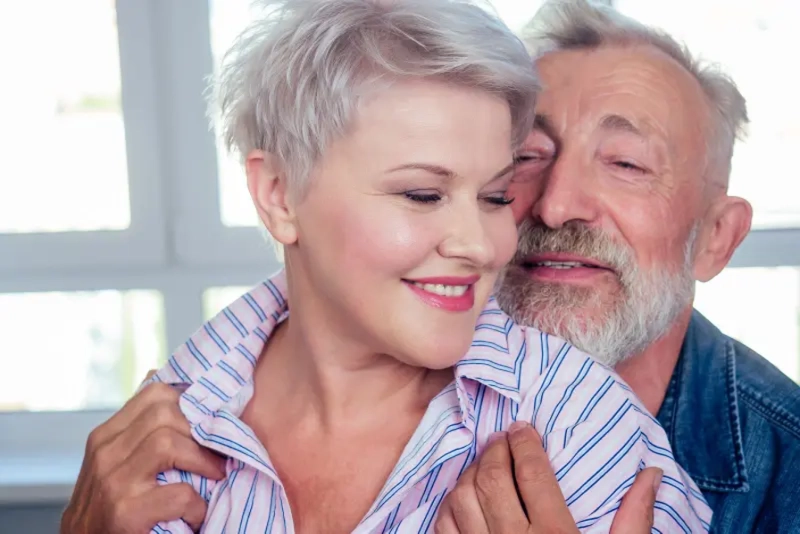
Health, and having a willing and able partner, matter more to older adults' sex lives than age itself. For many older women in particular, the limiting factor is not desire or ability but the absence of a partner, since women tend to outlive men. Emotional intimacy often deepens with age even as the frequency of sex declines, so that many older couples describe their sexual relationship as more satisfying than in their younger years, even if they're having less sex.
Older couples also tend to broaden what counts as sex. As intercourse becomes less central for some — whether because of physical changes, health conditions, or simple preference — many couples put more emphasis on other forms of physical intimacy, such as touching, oral and manual stimulation, or simply lying close together. Far from a consolation prize, this shift often reflects a mature understanding that sexual satisfaction is about connection and pleasure in its many forms, rather than centered around a single act. Psychologically, a lifetime of experience can work in older adults' favor. Many report feeling more comfortable in their bodies, more secure with a long-term partner, and freer from the performance worries and pregnancy concerns that preoccupy younger people.
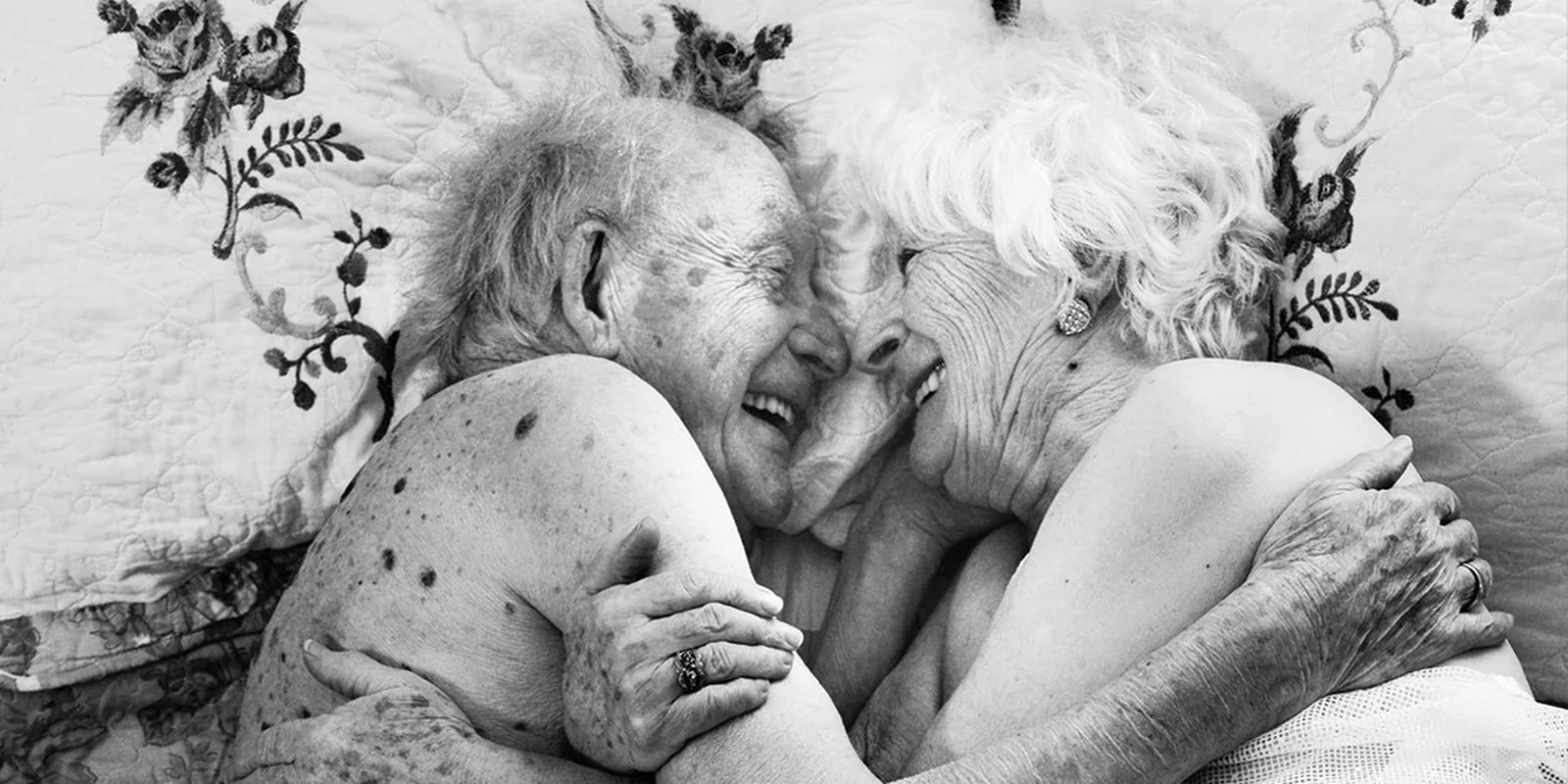
Attitudes are shifting too, if slowly. The generations now entering later life came of age during times of relative sexual openness, and they are less inclined than their predecessors to accept the idea that desire should switch off at a certain age. Recognizing older adults as sexual beings — with the same needs for intimacy, pleasure, and connection as anyone else — is increasingly seen as part of treating them with dignity.
A 72-year-old man tells his doctor he assumes his sex life is simply over because of his age. Based on the research, what is the most accurate thing the doctor could say?
Study Guide
After reading Chapter 11, you should be able to answer each of the questions below. Use your own words where possible, and support your answers with examples or evidence from the text.
11.1 Sexuality in Young Adulthood
- What is emerging adulthood, and how does this life stage shape the sexual exploration of people in their late teens and twenties?
- Describe the "sex recession" among young adults: what the data show, and what combination of factors researchers believe is driving the decline. Why is it also difficult for researchers to state exactly how much sex young people are having?
- Define hooking up and explain what the research shows about how people feel afterward. Why does motivation matter so much to the emotional outcome of a hookup?
- What is the orgasm gap, and how does the context of a sexual encounter (casual versus committed) relate to it?
- Describe a friends-with-benefits arrangement and the "rules" that often accompany it. What does the research reveal about how men and women tend to differ in what they want from these relationships?
- What are the benefits and downsides of dating apps according to the research? Describe the specific patterns of harassment that young women report experiencing.
11.2 Coupling, Cohabitation, and Marriage
- In what ways has marriage in the United States changed over recent decades in terms of timing and frequency? What reasons do young adults give for marrying later?
- What is singlism, and why do some researchers argue it deserves to be questioned?
- Define cohabitation and summarize the evidence on whether living together before marriage raises the risk of divorce. How do the reasons for moving in together, and a couple's age, change what researchers conclude? Explain the idea of "sliding versus deciding."
11.3 Sex in Long-Term Relationships
- Describe the typical trajectory of marital satisfaction and sexual frequency over the course of a long relationship. About when does the early "honeymoon" period tend to fade?
- What is sexual habituation, and how does the Coolidge effect illustrate it? Explain how this pattern shows up in both animals and humans.
- According to the research, what do couples who maintain a satisfying long-term sex life tend to do differently? Connect these strategies to the idea of novelty.
- Explain how having children tends to affect marital satisfaction and sexual frequency, and why. Then explain the difference between a happy life and a meaningful life as it applies to parenting.
11.4 Divorce and Remarriage
- How common is divorce in the United States, and in what direction has the divorce rate been moving? What are the most commonly reported reasons that marriages end?
- Explain the "red-state divorce paradox." Why is divorce more common in more conservative regions, according to the chapter?
- What tends to happen after a marriage ends? Describe the patterns in remarriage, including how the divorce risk of second and later marriages compares with that of first marriages, and the explanation researchers offer.
11.5 Sexuality and Aging
- Describe the main physical changes in sexual response that come with aging for women and for men. How can couples adapt to these changes?
- What does the evidence show about how sexually active older adults are? Identify the factors that most strongly shape an older person's sex life, and explain why emotional intimacy is relevant to the discussion.
Key Terms
- Cohabitation
- An unmarried couple living together in a romantic, sexually intimate relationship. It has become a common step before, or instead of, marriage.
- Coolidge effect
- The renewal of sexual interest, seen in many animal species and in humans, when a new sexual partner is introduced, even after an individual seems sexually satisfied with a current partner.
- Emerging adulthood
- The developmental stage from roughly the late teens through the mid-twenties, when a person is no longer an adolescent but has not yet fully taken on adult roles such as a stable career, marriage, or children. It is often a period of identity and sexual exploration.
- Friends-with-benefits
- An ongoing sexual relationship between two people who are friends but not romantic partners, and who agree to keep it that way. Partners often want different things from the arrangement.
- Hooking up
- A sexual encounter, ranging from kissing to intercourse, between people who are not in a romantic relationship and who do not necessarily expect one.
- Infidelity
- Sexual or romantic involvement with someone other than one's spouse or committed partner, in violation of the couple's agreement about exclusivity. Also called extramarital sex.
- Menopause
- The permanent end of menstruation, usually in a woman's late forties or fifties, marked by a sharp decline in estrogen that can reduce vaginal lubrication and slow sexual arousal.
- Monogamy
- Being partnered with only one person at a time. In serial monogamy, a person has one exclusive partner, then another, over the course of life.
- Orgasm gap
- The finding that women are much less likely than men to reach orgasm during a casual hookup, a gap that narrows considerably when sex occurs within a committed relationship.
- Refractory period
- The recovery time after orgasm during which a man cannot become aroused enough to ejaculate again. It tends to lengthen with age.
- Serial monogamy
- A pattern of having one exclusive partner at a time, but a series of such partners over a lifetime, rather than a single lifelong partner.
- Sexual habituation
- The gradual weakening of sexual arousal and interest that results from repeated exposure to the same partner over time, driven by the fading of novelty rather than by any real loss of attractiveness.
- Singlism
- The tendency to stereotype and look down on people who are single, treating committed romantic partnership as the only complete or fully adult way to live.
- Sliding versus deciding
- The idea that couples often move through major relationship transitions, such as moving in together, by drifting into them gradually rather than making a conscious choice, which can build momentum (inertia) that carries them into marriage.
References
- Allen, E. S., & Atkins, D. C. (2012). The association of divorce and extramarital sex in a representative U.S. sample. Journal of Family Issues, 33(11), 1477–1493. https://doi.org/10.1177/0192513X12439692
- Armstrong, E. A., England, P., & Fogarty, A. C. K. (2012). Accounting for women's orgasm and sexual enjoyment in college hookups and relationships. American Sociological Review, 77(3), 435–462. https://doi.org/10.1177/0003122412445802
- Arnett, J. J. (2000). Emerging adulthood: A theory of development from the late teens through the twenties. American Psychologist, 55(5), 469–480. https://doi.org/10.1037/0003-066X.55.5.469
- Baumeister, R. F., Vohs, K. D., Aaker, J. L., & Garbinsky, E. N. (2013). Some key differences between a happy life and a meaningful life. The Journal of Positive Psychology, 8(6), 505–516. https://doi.org/10.1080/17439760.2013.830764
- Bersamin, M. M., Zamboanga, B. L., Schwartz, S. J., Donnellan, M. B., Hudson, M., Weisskirch, R. S., Kim, S. Y., Agocha, V. B., Whitbourne, S. K., & Caraway, S. J. (2014). Risky business: Is there an association between casual sex and mental health among emerging adults? The Journal of Sex Research, 51(1), 43–51. https://doi.org/10.1080/00224499.2013.772088
- Bisson, M. A., & Levine, T. R. (2009). Negotiating a friends with benefits relationship. Archives of Sexual Behavior, 38(1), 66–73. https://doi.org/10.1007/s10508-007-9211-2
- Blasutto, B. (2020). Cohabitation versus marriage: Relationship quality across Europe.
- Bowman, Z., Drummond, M., Church, J., Kay, J., & Petersen, J. M. (2025). Dating apps and their relationship with body image, mental health and wellbeing: A systematic review. Computers in Human Behavior, 165, 108515. https://doi.org/10.1016/j.chb.2024.108515
- Brown, A. (2020, April 9). Lesbian, gay and bisexual online daters report positive experiences — but also harassment. Pew Research Center.
- Bruch, E. E., & Newman, M. E. J. (2018). Aspirational pursuit of mates in online dating markets. Science Advances, 4(8), eaap9815. https://doi.org/10.1126/sciadv.aap9815
- Byron, P., Albury, K., & Pym, T. (2021). Hooking up with friends: LGBTQ+ young people, dating apps, friendship and safety. Media, Culture & Society, 43(3), 497–514. https://doi.org/10.1177/0163443720972312
- Cahn, N., & Carbone, J. (2010). Red families v. blue families: Legal polarization and the creation of culture. Oxford University Press.
- Call, V., Sprecher, S., & Schwartz, P. (1995). The incidence and frequency of marital sex in a national sample. Journal of Marriage and the Family, 57(3), 639–652. https://doi.org/10.2307/353919
- Cargnino, M., & Lemke, R. (2023). Online dating site use to cope with minority stress in gay and bisexual men in Germany: Findings from two survey studies. International Journal of Sexual Health, 35(3), 383–398. https://doi.org/10.1080/19317611.2023.2220000
- Centers for Disease Control and Prevention. (2020). Youth Risk Behavior Survey data summary & trends report: 2009–2019. U.S. Department of Health and Human Services.
- Copen, C. E., Daniels, K., & Mosher, W. D. (2012). First marriages in the United States: Data from the 2006–2010 National Survey of Family Growth. National Health Statistics Reports, (49), 1–21.
- de la Croix, D., & Mariani, F. (2015). From polygyny to serial monogamy: A unified theory of marriage institutions. The Review of Economic Studies, 82(2), 565–607.
- Feldman, H. A., Goldstein, I., Hatzichristou, D. G., Krane, R. J., & McKinlay, J. B. (1994). Impotence and its medical and psychosocial correlates: Results of the Massachusetts Male Aging Study. The Journal of Urology, 151(1), 54–61. https://doi.org/10.1016/s0022-5347(17)34871-1
- Flack, W. F., Jr., Daubman, K. A., Caron, M. L., Asadorian, J. A., D'Aureli, N. R., Gigliotti, S. N., Hall, A. T., Kiser, S., & Stine, E. R. (2007). Risk factors and consequences of unwanted sex among university students: Hooking up, alcohol, and stress response. Journal of Interpersonal Violence, 22(2), 139–157. https://doi.org/10.1177/0886260506295354
- Garcia, J. R., Reiber, C., Massey, S. G., & Merriwether, A. M. (2012). Sexual hookup culture: A review. Review of General Psychology, 16(2), 161–176. https://doi.org/10.1037/a0027911
- Geiger, A. W., & Livingston, G. (2020). 8 facts about love and marriage in America. Pew Research Center.
- General Social Survey. (2025). Get the data. NORC at the University of Chicago. https://gss.norc.org/get-the-data.html
- Gurrentz, B., & Mayol-García, Y. (2021). Marriage, divorce and remarriage patterns in the United States. U.S. Census Bureau.
- Hatfield, E., & Walster, G. W. (1978). A new look at love. University Press of America.
- Holtzhausen, N., Fitzgerald, K., Thakur, I., Ashley, J., Rolfe, M., & Pit, S. W. (2020). Swipe-based dating applications use and its association with mental health outcomes: A cross-sectional study. BMC Psychology, 8, 8. https://doi.org/10.1186/s40359-020-0373-1
- Horowitz, J. M., Graf, N., & Livingston, G. (2019). Marriage and cohabitation in the U.S. Pew Research Center.
- Hughes, M., Morrison, K., & Asada, K. J. K. (2005). What's love got to do with it? Exploring the impact of maintenance rules, love attitudes, and network support on friends with benefits relationships. Western Journal of Communication, 69(1), 49–66. https://doi.org/10.1080/10570310500034154
- Huston, T. L., Caughlin, J. P., Houts, R. M., Smith, S. E., & George, L. J. (2001). The connubial crucible: Newlywed years as predictors of marital delight, distress, and divorce. Journal of Personality and Social Psychology, 80(2), 237–252. https://doi.org/10.1037/0022-3514.80.2.237
- Julian, K. (2018, December). The sex recession. The Atlantic.
- Kahneman, D., Krueger, A. B., Schkade, D. A., Schwarz, N., & Stone, A. A. (2004). A survey method for characterizing daily life experience: The day reconstruction method. Science, 306(5702), 1776–1780. https://doi.org/10.1126/science.1103572
- Kennedy, S., & Ruggles, S. (2014). Breaking up is hard to count: The rise of divorce in the United States, 1980–2010. Demography, 51(2), 587–598. https://doi.org/10.1007/s13524-013-0270-9
- Kurdek, L. A. (1998). The nature and predictors of the trajectory of change in marital quality for husbands and wives over the first 10 years of marriage. Developmental Psychology, 34(5), 1033–1046. https://doi.org/10.1037/0012-1649.34.5.1033
- LaBrie, J. W., Hummer, J. F., Ghaidarov, T. M., Lac, A., & Kenney, S. R. (2014). Hooking up in the college context: The event-level effects of alcohol use and partner familiarity on hookup behaviors and contentment. The Journal of Sex Research, 51(1), 62–73. https://doi.org/10.1080/00224499.2012.714010
- Le Page, M., & Bhattacharya, S. (2023). A few prehistoric men had all the children. New Scientist.
- Lee, D. M., Nazroo, J., O'Connor, D. B., Blake, M., & Pendleton, N. (2016). Sexual health and well-being among older men and women in England: Findings from the English Longitudinal Study of Ageing. Archives of Sexual Behavior, 45(1), 133–144. https://doi.org/10.1007/s10508-014-0465-1
- Lehmiller, J. J., VanderDrift, L. E., & Kelly, J. R. (2011). Sex differences in approaching friends with benefits relationships. The Journal of Sex Research, 48(2–3), 275–284. https://doi.org/10.1080/00224499.2010.497984
- Lei, L., & South, S. J. (2021). Explaining the decline in young adult sexual activity in the United States. Journal of Marriage and Family, 83(1), 280–295. https://doi.org/10.1111/jomf.12723
- Lindau, S. T., Schumm, L. P., Laumann, E. O., Levinson, W., O'Muircheartaigh, C. A., & Waite, L. J. (2007). A study of sexuality and health among older adults in the United States. New England Journal of Medicine, 357(8), 762–774. https://doi.org/10.1056/NEJMoa067423
- Lo Coco, G., Rodgers, R., Harris, E. A., Markey, C., Sicilia, A., Aimé, A., Dion, J., Salerno, L., Hayami-Chisuwa, N., White, H. J., Plateau, C. R., Granero-Gallegos, A., Maïano, C., Manzoni, G. M., Pietrabissa, G., Bégin, C., Blackburn, M.-É., Strodl, E., Fuller-Tyszkiewicz, M., & McCabe, M. (2026). Investigating the relation between social media, dating app use and body image dimensions: A cross-country study. British Journal of Health Psychology, 31(2), e70067. https://doi.org/10.1111/bjhp.70067
- Morton, H., & Gorzalka, B. B. (2015). Role of partner novelty in sexual functioning: A review. Journal of Sex & Marital Therapy, 41(6), 593–609. https://doi.org/10.1080/0092623X.2014.958788
- Muise, A., Harasymchuk, C., Day, L. C., Bacev-Giles, C., Gere, J., & Impett, E. A. (2019). Broadening your horizons: Self-expanding activities promote desire and satisfaction in established romantic relationships. Journal of Personality and Social Psychology, 116(2), 237–258. https://doi.org/10.1037/pspi0000148
- Neal, Z. P., & Neal, J. W. (2021). Prevalence and characteristics of childfree adults in Michigan (USA). PLOS ONE, 16(6), e0252528. https://doi.org/10.1371/journal.pone.0252528
- Northrup, C., Schwartz, P., & Witte, J. (2013). The normal bar: The surprising secrets of happy couples and what they reveal about creating a new normal in your relationship. Harmony Books.
- O'Leary, K. D., Acevedo, B. P., Aron, A., Huddy, L., & Mashek, D. (2012). Is long-term love more than a rare phenomenon? If so, what are its correlates? Social Psychological and Personality Science, 3(2), 241–249. https://doi.org/10.1177/1948550611417015
- Olmstead, S. B., LeFebvre, L. E., & Allen, M. (2026). A meta-analysis of friends with benefits relationships: Examining sexual features, sexual and mental health, violence/aggression, and gender. Archives of Sexual Behavior, 55(3), 1045–1067. https://doi.org/10.1007/s10508-026-03426-0
- Owen, J., & Fincham, F. D. (2012). Friends with benefits relationships as a start to exclusive romantic relationships. Journal of Social and Personal Relationships, 29(7), 982–996. https://doi.org/10.1177/0265407512448275
- Paul, E. L., McManus, B., & Hayes, A. (2000). "Hookups": Characteristics and correlates of college students' spontaneous and anonymous sexual experiences. The Journal of Sex Research, 37(1), 76–88. https://doi.org/10.1080/00224490009552023
- Perel, E. (2006). Mating in captivity: Unlocking erotic intelligence. HarperCollins.
- Rosenfeld, M. J., Thomas, R. J., & Hausen, S. (2019). Disintermediating your friends: How online dating in the United States displaces other ways of meeting. Proceedings of the National Academy of Sciences, 116(36), 17753–17758. https://doi.org/10.1073/pnas.1908630116
- Schacht, R., & Bell, A. V. (2016). The evolution of monogamy in response to partner scarcity. Scientific Reports, 6, 32472. https://doi.org/10.1038/srep32472
- Schacht, R., & Kramer, K. L. (2019). Are we monogamous? A review of the evolution of pair-bonding in humans and its contemporary variation cross-culturally. Frontiers in Ecology and Evolution, 7, 230. https://doi.org/10.3389/fevo.2019.00230
- Scott, S. B., Rhoades, G. K., Stanley, S. M., Allen, E. S., & Markman, H. J. (2013). Reasons for divorce and recollections of premarital intervention: Implications for improving relationship education. Couple and Family Psychology: Research and Practice, 2(2), 131–145. https://doi.org/10.1037/a0032025
- Sculley, J., & Watkins, C. D. (2022). The great porn experiment V2.0: Sexual arousal reduces the salience of familiar women when heterosexual men judge their attractiveness. Archives of Sexual Behavior, 51(6), 3071–3082. https://doi.org/10.1007/s10508-022-02317-4
- Sharabi, L. L., Von Feldt, P. A., & Ha, T. (2026). Burnt out and still single: Susceptibility to dating app burnout over time. New Media & Society. Advance online publication. https://doi.org/10.1177/14614448241286788
- Smith, M., Bradbury, T., & Karney, B. (2026). Division of housework, sexual intimacy, and relationship quality in different-sex and same-sex couples. Journal of Marriage and Family. Advance online publication. https://doi.org/10.1111/jomf.70073
- Stanley, S. M., Rhoades, G. K., & Markman, H. J. (2006). Sliding versus deciding: Inertia and the premarital cohabitation effect. Family Relations, 55(4), 499–509. https://doi.org/10.1111/j.1741-3729.2006.00418.x
- Taibbi, R. (2024, January). 5 risks for people marrying a second or third time. Psychology Today.
- Tracy, E. L., & Berntson, T. (2016). Hookup partner familiarity among college students.
- Tramontano, M. K. (2025). A nation without leave: The U.S. vs. the world on paid parental leave. Syracuse Journal of International Law and Commerce.
- Twenge, J. M., Campbell, W. K., & Foster, C. A. (2003). Parenthood and marital satisfaction: A meta-analytic review. Journal of Marriage and Family, 65(3), 574–583. https://doi.org/10.1111/j.1741-3737.2003.00574.x
- Twenge, J. M., Sherman, R. A., & Wells, B. E. (2017). Declines in sexual frequency among American adults, 1989–2014. Archives of Sexual Behavior, 46(8), 2389–2401. https://doi.org/10.1007/s10508-017-0953-1
- Vogels, E. A. (2020). The virtues and downsides of online dating. Pew Research Center. https://www.pewresearch.org/internet/2020/02/06/the-virtues-and-downsides-of-online-dating/
- Vrangalova, Z. (2015). Hooking up and psychological well-being in college students: Short-term prospective links across different hookup definitions. The Journal of Sex Research, 52(5), 485–498. https://doi.org/10.1080/00224499.2014.910745
- Walsh, J. L., Fielder, R. L., Carey, K. B., & Carey, M. P. (2013). Female college students' media use and academic outcomes: Alcohol, sexual partners, and hookups.
- Wang, W. (2018). Who cheats more? The demographics of infidelity in America. Institute for Family Studies.
- Wang, W. (2020). More than one-third of U.S. adults have never been married. Institute for Family Studies.
- Wheatley Institute. (2025). Counterfeit connections: AI romantic companions. Brigham Young University.
- WORLD Policy Analysis Center. (2023, February). Paid leave for new parents [Policy brief]. https://www.worldpolicycenter.org/
- Wright, R. (1994). The moral animal: The new science of evolutionary psychology. Pantheon Books.
- Zahler, C. (2023, January 20). What percentage of marriages end in divorce? Putting methods to the madness. Quantitative Methods in the Social Sciences, University of Michigan.